
PEC-AICTE IDEA LAB
Objective and Benefits
Vision
Committee Members
Inauguration
Facilities
Upcoming Events
Newsletter
Objectives
- To set up, equip and network co-creative centres (IDEA labs) to support students to generate, develop and commercialize their own innovative ideas through entrepreneurship or open innovation
- To foster student entrepreneurship and start-up creation at university settings by improving infrastructure, entrepreneurial culture and skills
- To introduce and implement open innovation as a new form of partnership among key stakeholders in knowledge
- To revise and adapt curriculum to include entrepreneurial skills and problem-based learning.
Benefits
- To motivate students and researchers to actively use their intellectual potential to generate novel ideas
- Institution enabled IDEA lab will provide a common platform for the students and researchers having instinctive ideas and creative potentials.
- IDEA lab will provide an ambient environment with latest hardware and software ,training ,mentoring and networking software support for the dissemination of knowledge and develop ones analytical and critical thinking and problem solving skill set.
Vision
- To create a platform to experiment with ideas for qualitative change in the life within the town and proximity rural areas to foster the "Make in India" movement of the nation.
- To develop the human life of individuals who sharing knowledge, ideas, and technology to establish people of all ages.
- To create a reference centre focused on the development and rapid prototyping of design projects for technological transformation and innovation.
- To assist the learning process based on the modern trends required by the industry and the market.
- To create a high-spirited mentor network for ennoble the capabilities of young minds.
- To establish a national network of AICTE- IDEA Labs promoting new-age learning.
Committee Members
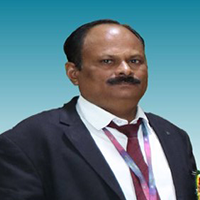
Dr.K.MANI M.E., Ph.D.,
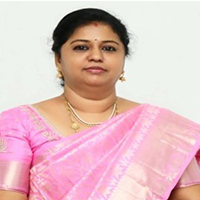
Dr.S.MALATHI M.E., Ph.D.,
Inauguration
PEC-AICTE IDEA LAB Was Inaugurated by Mr.M.Sundaresan (AICTE Southern Region Office Chennai) on 18th Nov 2022.


PRINTED CIRCUIT BOARD(PCB)
A single-layer PCB is manufactured using a subtractive etching process with ferric chloride. The circuit pattern is protected by a resist while exposed copper is chemically removed. After etching and resist removal, the remaining copper forms the PCB tracks.

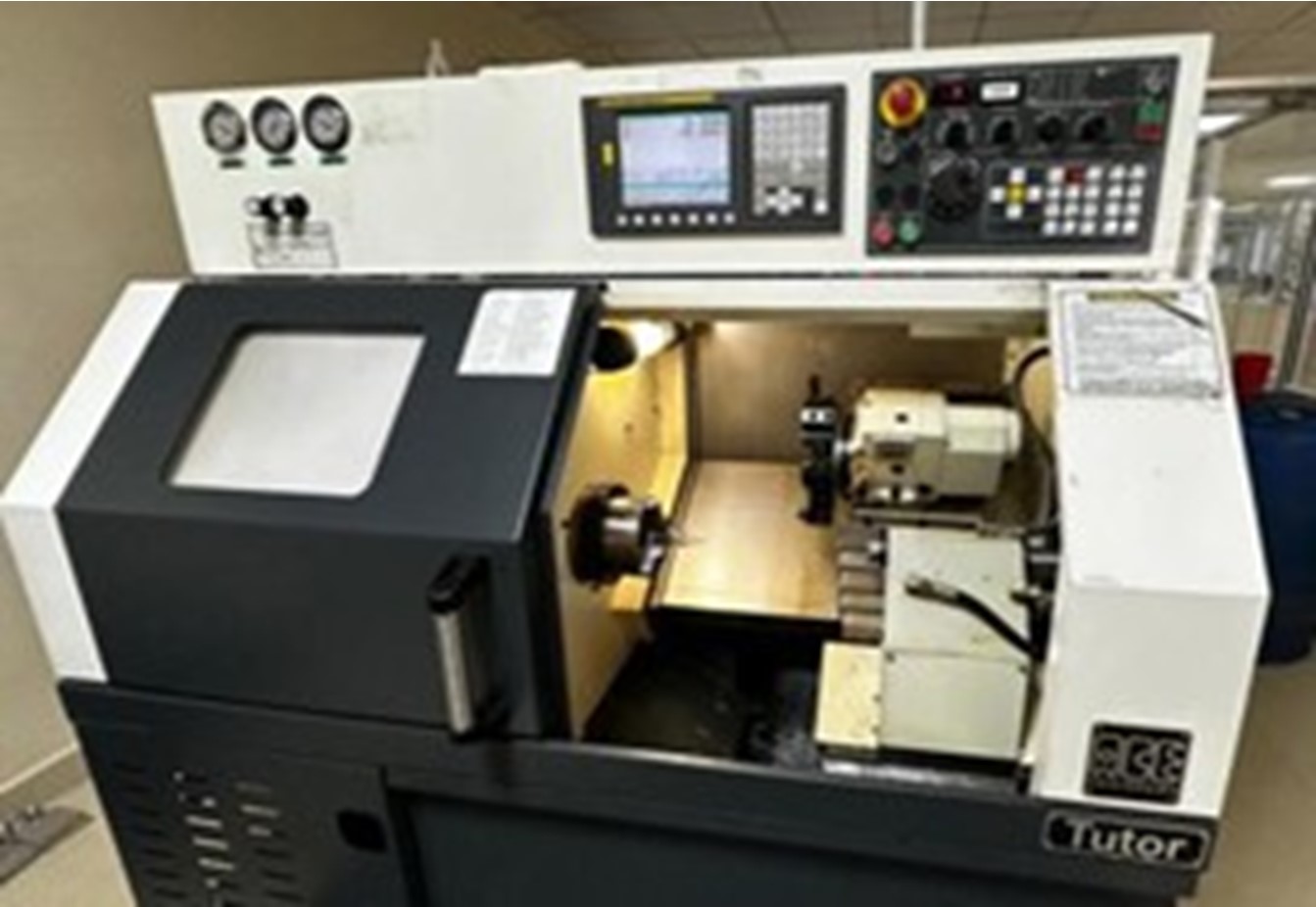
COMPUTER NUMERICAL CONTROL(CNC) LATHE
A CNC lathe is a precision machine that shapes cylindrical parts by rotating the workpiece and removing material using cutting tools. It operates automatically using computer-controlled G-code, ensuring high accuracy and repeatability. Common operations include turning, facing, threading, drilling, grooving, and boring.
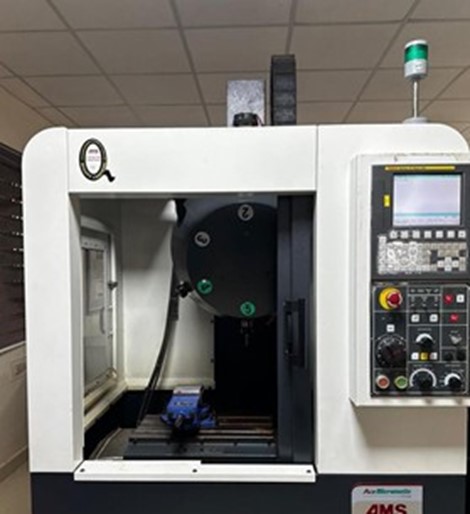
COMPUTER NUMERICAL CONTROL(CNC) MILLING
A CNC milling machine is a precision tool that removes material using a rotating multi-point cutting tool controlled by a computer program. The workpiece is fixed on a table that moves along multiple axes (X, Y, and Z) as per G-code instructions. It performs operations like face milling, slotting, drilling, pocketing, contouring, and tapping with high accuracy.

COMPUTER NUMERICAL CONTROL(CNC) ROUTER
A CNC router is an automated machine that cuts, carves, and engraves materials using a computer-controlled rotating tool moving along the X, Y, and Z axes. It is widely used in woodworking, furniture, sign making, PCB machining, and can machine wood, plastics, acrylics, aluminum, and composites.
FUSED DEPOSITION MODELLING
An FDM 3D printer is an additive manufacturing machine that builds objects layer by layer by extruding molten thermoplastic through a heated nozzle. The filament melts in the extruder and is deposited on the build platform as per G-code, forming the final part layer by layer.


LASER ENGRAVER
Laser engraving is a non-contact process that uses a focused high-intensity laser beam to permanently mark or engrave surfaces. It is CNC-controlled for high precision and is widely used on metals, plastics, wood, glass, leather, ceramics, and coated materials.
ROBOTIC AUTOMATION – OPTIMUS PROMINENCE SECTION
The Robotic Automation and IoT sections train students in industrial robots, automation programming, sensors, microcontrollers, and smart connected systems. The Electrical Technology section focuses on sustainable energy using solar panels, battery storage, inverters, and wind energy models.


ELECTRICAL TECHNOLOGY – SUSTAINABLE ENERGY SECTION
The Electrical Technology – Sustainable Energy section is a lab where students learn about renewable energy systems like solar, wind, battery storage, and energy management. It provides hands-on experience with panels, inverters, and controllers, helping students understand clean energy generation and sustainable power usage.
3D PRINTER EXTRUDER FILAMENT COLLECTING
The 3D printer extruder filament collecting system guides and stores the filament smoothly for continuous feeding during printing. It prevents tangling and ensures consistent material flow to maintain print quality.


ELECTRIC CAR
The image shows a prototype electric car with an open tubular chassis, lightweight body, and compact four-wheel design. It demonstrates an educational electric vehicle model highlighting electric drivetrain components, battery placement, and sustainable mobility concepts.
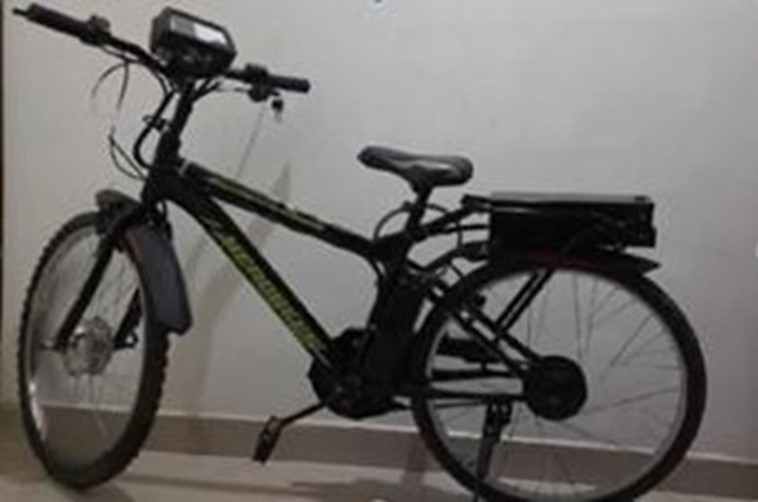
ELECTRIC BICYCLE
An electric bicycle combines a traditional bicycle with an electric motor and battery to assist pedaling. It offers an eco-friendly, cost-effective mode of transport with reduced effort and energy consumption.

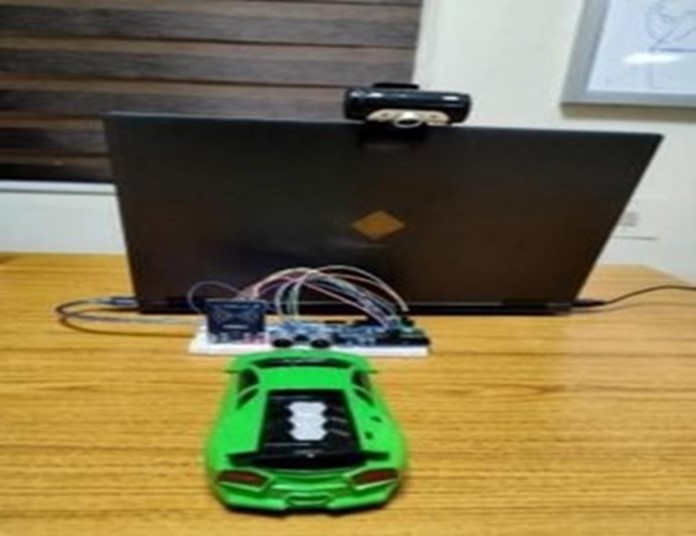
AUTONOMOUS VEHICLE
An autonomous vehicle is a self-driving system that uses sensors, cameras, and AI to navigate without human intervention. It improves safety, efficiency, and mobility by making intelligent driving decisions in real time.
INCUBATOR
An incubator is a controlled environment system used to maintain optimal temperature and conditions for growth or development. It is commonly used in laboratories, agriculture, and startups for hatching, research, and innovation support.


SOLAR TREE
A solar tree is a smart structure that holds multiple solar panels arranged like tree branches to capture maximum sunlight. It generates clean, renewable energy while saving space and promoting sustainable power solutions.
TRACKING SYSTEM
A tracking system monitors the real-time location or movement of objects, vehicles, or people using sensors and communication technologies. It improves safety, security, and efficiency in applications like logistics, transportation, and asset management.

TVASATA CHALLENEGE
The image shows a detailed architectural model of the Ramappa Temple in Telangana, highlighting its intricate stepped design and pillar structure. It represents the rich Kakatiya-era craftsmanship and the temple’s historical and cultural significance.
SHADOW SOLAR PANNEL TRACKING SYSTEM
A shadow solar panel tracking system uses the shadow position to automatically align the panel toward the sun. It improves energy efficiency by maximizing sunlight exposure throughout the day.


SOLAR PANNEL CLEANING ROBOT
A solar panel cleaning robot automatically removes dust and debris from panel surfaces without manual effort. It improves power generation efficiency and reduces maintenance time and water usage..
VENDING MACHINE
A vending machine is an automated device that dispenses products like snacks, drinks, or essentials after receiving payment. It provides quick, convenient, and self-service purchasing in public and commercial spaces.

Events tobe Conducted in Upcoming Months
| Date | Days | Events |
|
02- 02-2026 |
FIVE DAYS |
3D PRINTING TECHNOLOGY |
|
09- 02-2026 |
FIVE DAYS |
LASER ENGRAVING TECHNOLOGY |
|
16- 02-2026 |
FIVE DAYS |
3D PRINTING TECHNOLOGY |
|
23- 02-2026 |
FIVE DAYS |
LASER ENGRAVING TECHNOLOGY |