

About the Department
Vision and Mission
PEO,PO’S,PSO’S
HOD Profile
Faculty List
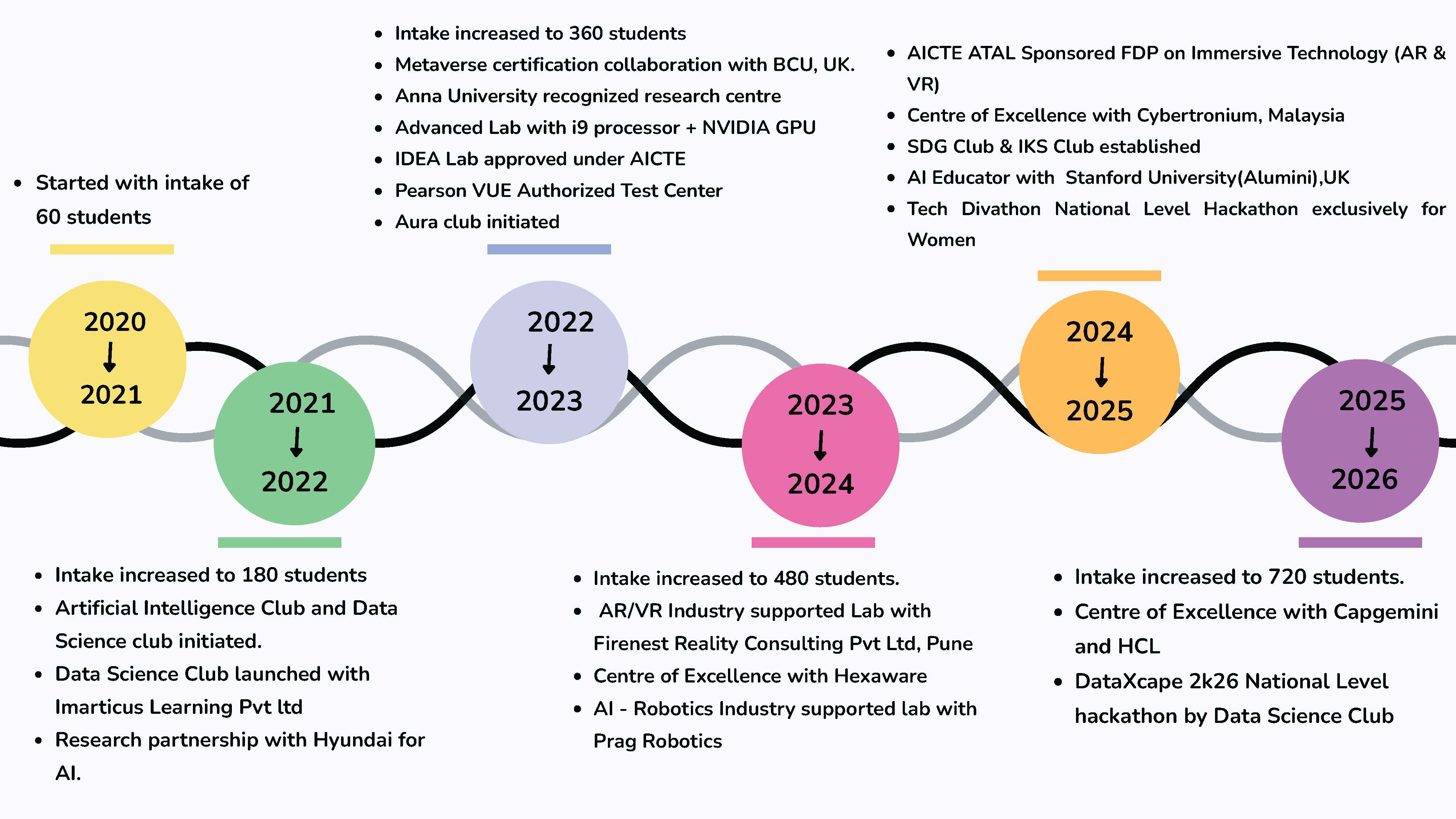
Milestones
Professional Society
Clubs
Events
FDP
Pearson
Newsletter & Magazine
Value Added Course
Committee Details
Gallery
Survey Forms
Question Bank
Faculty Video Lectures
Department Library
About the Department
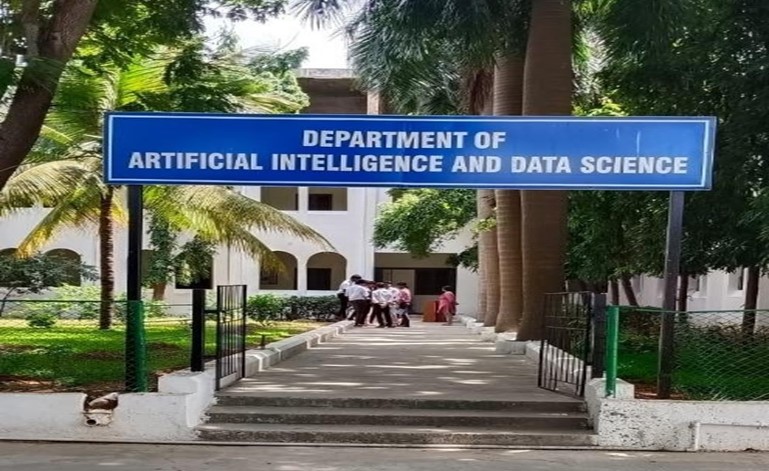
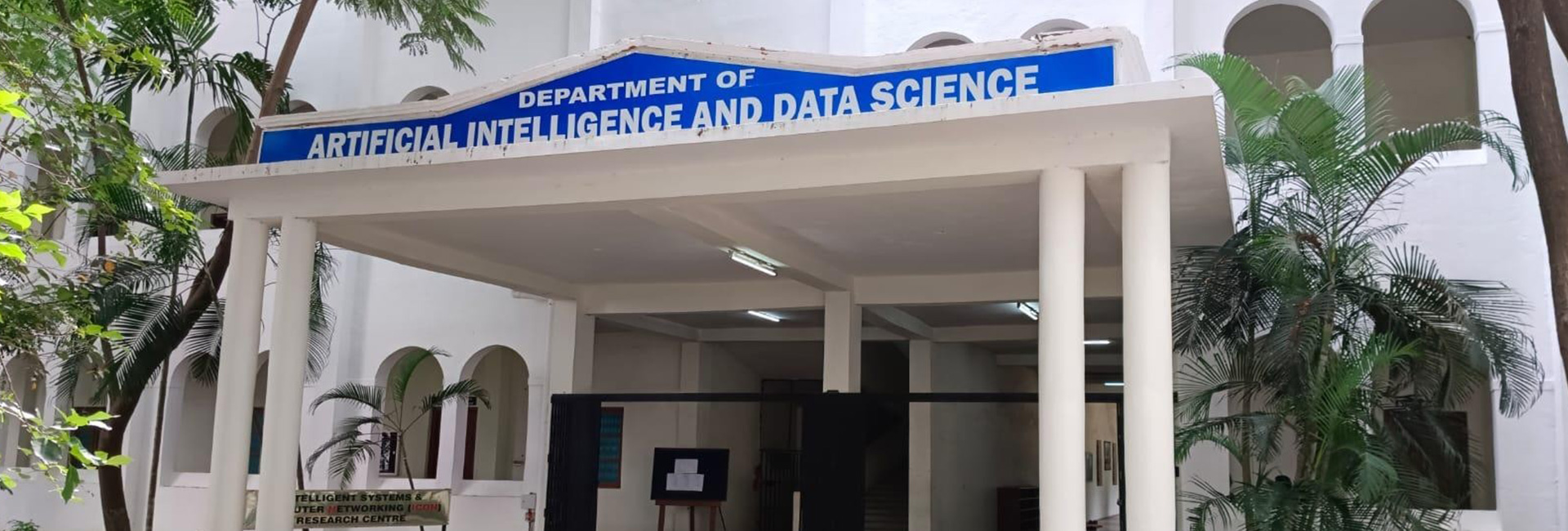
The Department of Artificial Intelligence and Data science established in the year 2020, has been incessantly making advancement in teaching and Research & Development activities. The department has well trained and experienced faculty members specialized in the field of Artificial Intelligence and Data Science.
B.Tech. in Artificial Intelligence & Data Science (AI & DS) is a four year full time UG degree program with the skills to sensitize students to perform intelligent data analysis and imparting knowledge of advanced innovations like Artificial Intelligence, Data Science, Machine Learning, Deep Learning, Robotics and Natural Language Processing (NLP). The Department also offers Ph.D. Program (Full Time/Part Time) from the year 2022. The department aims to train students as leaders, researchers and entrepreneur’s in the field of AI & DS in world class infrastructure, curriculum and comprehensive hands on experience through industry connect programs. Industry Institute Collaborations are extensively carried out by providing guest lectures from industry experts, industrial visits, workshops, hands - on training sessions and etc. The department is emphasized on research, design and development of next generation cutting-edge technologies in the area of Artificial Intelligence and Data Analytics.
This curriculum aims to enhance the following key attributes among students:
- The program encompasses emerging areas in the field of Data Science, Data Engineering and Advanced Analytics through application-oriented and student-centric learning.
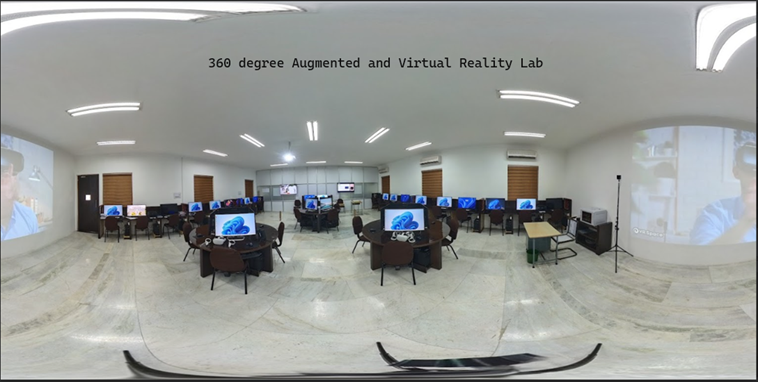
- The program fosters students to get expertise in critical skills such as Artificial Intelligence, Machine learning, Augmented and Virtual Reality, Product development, scripting languages and Mathematical modelling.
- Acquire meaningful insights in the areas of natural language processing, text mining, robotics, reasoning and problem solving.
- Create and design intelligent solutions to real time Business applications.
- To develop useful tools which would benefit to the society in the field of Healthcare applications
Vision and Mission

VISION
To produce high quality creators and ethical engineers for innovative technology in the field of Artificial Intelligence and Data Science.
MISSION
- M1: To develop the department as a center of Artificial Intelligence for significant breakthroughs in advancing the promise of human-machine systems that can address complex cognitive tasks.
- M2: To impart quality and value-based education and contribute towards the innovation of computing Data Science for the translation of data into information to support and improve decision making.
- M3: To produce ethical engineers and researchers by inculcate the values of humanity and courage in producing relevant solutions to address business and societal challenges.
Programme Educational Objectives(PEOs)
Programme Outcomes (PO)
PO1: Engineering Knowledge
Apply knowledge of mathematics, natural science, computing, engineering
fundamentals and an engineering specialization as specified in WK1 to WK4
respectively to develop to the solution of complex engineering problems.
PO2: Problem Analysis
Identify, formulate, review research
literature and analyze complex engineering problems reaching substantiated
conclusions with consideration for sustainable development. (WK1 to WK4)
PO3: Design/Development of Solutions
Design creative solutions for complex engineering problems and design/develop
systems/components/processes to meet identified needs with consideration for the
public health and safety, whole-life cost, net zero carbon, culture, society and
environment as required. (WK5)
PO4: Conduct Investigations of Complex Problems
Conduct
investigations of complex engineering problems using research-based knowledge
including design of experiments, modelling, analysis & interpretation of data to
provide valid conclusions. (WK8).
PO5: Engineering Tool Usage
Create, select and apply
appropriate techniques, resources and modern engineering & IT tools, including
prediction and modelling recognizing their limitations to solve complex
engineering problems. (WK2 and WK6)
PO6: The Engineer and the World
Analyze and evaluate
societal and environmental aspects while solving complex engineering problems
for its impact on sustainability with reference to economy, health, safety,
legal framework, culture and environment. (WK1, WK5 and WK7).
PO7: Ethics
Apply ethical principles and commit to
professional ethics, human values, diversity and inclusion; adhere to national &
international laws. (WK9).
PO8: Individual and Collaborative Team Work
Function
effectively as an individual, and as a member or leader in
diverse/multi-disciplinary teams.
PO9: Communication
Communicate effectively and inclusively
within the engineering community and society at large, such as being able to
comprehend and write effective reports and design documentation, make effective
presentations considering cultural, language, and learning differences.
PO10: Project Management and Finance
Apply knowledge and
understanding of engineering management principles and economic decision-making
and apply these to one’s own work, as a member and leader in a team, and to
manage projects and in multidisciplinary environments.
PO11: Life-Long Learning
Recognize the need for, and have
the preparation and ability for i) independent and life-long learning ii)
adaptability to new and emerging technologies and iii) critical thinking in the
broadest context of technological change. (WK8) .
Programme Specific Outcomes (PSOs)
PSO 1 : AI Driven Innovation
Graduates should be able to
evolve
AI based efficient domain specific processes for effective decision making in
several domains such as business and governance domains.
PSO 2 : Data-Driven Decision Making Insight
Graduates should
be
able to arrive at actionable fore sight, insight, hind sight from data for
solving business and engineering problems.
PSO 3 : Societal Intelligence Solutions
Graduates should be
able
to create, select and apply the theoretical knowledge of AI and Data Analytics
along with practical industrial tools and techniques to manage and solve wicked
societal problems.
HOD Profile
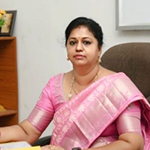
Dr. S. MALATHI
Professor & Head Artificial Intelligence and Data Science
Dr.S.Malathi, Professor, specialized in the area of Artificial Intelligence, Machine Learning, Image Processing, Computer Vision, Internet of Things and Software Engineering. Bachelor of Engineering in Coimbatore Institute of Technology, Bhararthiyar University, Master’s Degree and Ph.D from Sathyabama Deemed University, Chennai.
Research Credentials
h-index(Scopus): 12
https://www.scopus.com/authid/detail.uri?authorId=57195331995
Orchid id : 0000-0002-7413-2386
https://scholar.google.com/citations?user=D5KKfTgAAAAJ
Academic Excellence
• Doctorate degree holder from Sathyabama University, Chennai (2013) in the
field of
Software Engineering. Research program was oriented towards developing an
integrated approach, “FUZANN”, for minimizing the effort and reduce the
development cost of software projects.
• Masters Degree in Computer Science and Engineering from Sathyabama
University,
Year 2004.
• Bachelors Degree in Engineering from Coimbatore Institute of Technology,
Bharathiyar University, Coimbatore, Year 1995.
Career Summary
Twenty Eight years of profound experience as engineering faculty in various capacities including 14 years of research experience.
Awards Received
• Received A.P.J.Abdul Kalam Excellence Award, 2021 from Shikshak Kalyan
Foundation in association with AICTE
• Received Best Ph.D Thesis Award from Computer Society of India(CSI), 2013
• Received Best International Paper Presenter Award from Computer Society of
India(CSI), 2012
Projects Awarded under the Guidance
1. Mail Notification for missed calls and SMS in Android Phones- Received the first
place in TECHKNOW’14 conducted by Anna University under All India Manufacturers
Organization (AIMO), 2014.
2. Accident Detection and Rescue System-Received National Recognition and the Best
Project Award from Dr. A.P.J Abdul Kalam, late Former President of India,
Copyrights & Patents
1. Copyrights registered for software “Automatic Volume Level Adapter for Portable
Device", 2019(Diary No. 12378/2017-CO/SW)
2. Copyrights registered under Literary/Dramatic for “Innovation to Identify an
Emergency Call Algorithm", 2019. (Diary No.: 483/2019-CO/L)
3. Patent-Holonomic Drive Conveyor System and its method using IoT- (Patent no:
2020104116), by Australian Government, Feb. 2020.
4. Patent Grant 2024- MPK Elite Humanoid Robot for Intelligence Hostage- (Patent-
No: 539538; Application No: 201941021927)
Research/ Scheme Grants
• Received grant from AICTE in the year 2022 for establishing Idea
Development, Evaluation and Application (IDEA LAB)
• Received grant from Hyundai WIA India Private Ltd, Chennai for the project
“Detection of faulty subpart assembly in Automobile Industry using AI.”
• Received conference fund from AICTE 2022.
• Received International grant from Global Challenges Research Fund (GCRF),
Birmingham City University, UK(2020 – 21) for the project
“Building Capacity to tackle design engg and manufacturing challenges in Punjab
(India)”
• Research on Detection of Fuel Injector Nozzle Hole and Diameter
through Deep Learning Technique (Under Progress) for Delphi TVS
Technologies, Chennai.
Books Published
1.
Dr.M.Helda Mercy, Dr.S.Malathi, Mr.M.Dilli Babu "Problem Solving and Python
Programming”, Global Publications, (ISBN:978-81-9316-256-9 ), Chennai,
2021.
2.
Dr.S.Malathi, Dr.M.Helda Mercy,, "Problem Solving and Programming in C",
Global Publication House, Chennai, 2021.
3. Hemanth,
D.J. V.D.Ambeth Kumar, S.Malathi , "Emerging Current Trends in
Computing and Expert Technology", Advances in Parallel Computing,IOS Press,
ISBN:978-1-64368-103-0, 2020.
4. Ambeth
Kumar, V.D., Malathi, S.,Balas, V.E.,Favorskaya, M.,Perumal, T.”Smart
Intelligent Computing and Communication Technology”, Advances in Parallel
Computing, IOS Press, 2021.(ISBN: 978-1-64368-203-7)
5.
Dr.V.D.Ambeth Kumar, Dr.S.Malathi, Dr.D.Karunkuzhali, Prof.D.Elangovan,
"Proceedings of the International Conference for Phoenixes on Emerging Current
Trends in Engineering and Management", ISBN : 978-94-6252-492-7, Part of
series: AER, ISSN : 2352-5401, Volume: 142, 2018.
6. S.
Malathi , K Kiruthika , C Jackulin, " Compiler Design", Ane Books, ISBN:
9385462598, 2019.
7. Hemanth,
D.J. V.D.Ambeth Kumar, S.Malathi, Castillo, O., Patrut, B " Emerging Trends in
Computing and Expert Technology" Lecture Notes on Data Engineering and
Communications Technologies, ISBN: 978-3-030-32150-5. 2019.
8. Dr.S.Malathi,
"Software Quality Management", Lakshmi Publications, Chennai, 2018.
Faculty List
| S.No. | Name of the Faculty | Designation |
|
1. |
Dr. MALATHI S | Professor & Head |
|
2. |
Dr. THAMARAI I | Professor |
|
3. |
Dr. JOSHI A | Professor |
|
4. |
Dr. JAYASHREE K | Professor |
|
5. |
Dr. CHAKARAVARTHI S | Professor |
|
6. |
Dr. GRACY THERESA W | Professor |
|
7. |
Dr. KALAICHELVI T | Professor |
|
8. |
Dr. SIVAKUMAR N | Professor |
|
9. |
Dr. VEERAMANI T | Professor |
|
10. |
Dr. RAMMOHAN N R | Professor |
|
11. |
Dr. SEETHA J | Professor |
|
12. |
Dr. ANBARASA PANDIAN A | Professor |
|
13. |
Mrs. VIMALA S | Associate Professor |
|
14. |
Dr. VIVEK C | Associate Professor |
|
15. |
Dr. BHARANIDHARAN C | Associate Professor |
|
16. |
Dr. GNANAPRAKASAM C | Associate Professor |
|
17. |
Dr. MAHARAJAN M S | Associate Professor |
|
18. |
Dr. BHUVANESWARI E | Associate Professor |
|
19. |
Dr. LEELAVATHY S | Associate Professor |
|
20. |
Dr. MAHAVAISHNAVI V | Assistant Professor |
|
21. |
Dr. SELVA BANU PRIYA T | Assistant Professor |
|
22. |
Dr. RATHINAPRIYA V | Assistant Professor |
|
23. |
Dr. SHAJI D S | Assistant Professor |
|
24. |
Dr. VIDHYASREE M | Assistant Professor |
|
25. |
Dr. SRINIDHI S | Assistant Professor |
|
26. |
Dr. SADHASIVAM M | Assistant Professor |
|
27. |
Dr. RAVEENA S | Assistant Professor |
|
28. |
Dr. VIJAYA MAHENDRA VARMAN A | Assistant Professor |
|
29. |
Dr. KARTHIKEYAN T | Assistant Professor |
|
30. |
Dr. CHITRA B | Assistant Professor |
|
31. |
Mrs. PRIYA R | Assistant Professor |
|
32. |
Mrs. BABISHA A | Assistant Professor |
|
33. |
Mrs. SANDHIYA S | Assistant Professor |
|
34. |
Mrs. TAMILSELVI K | Assistant Professor |
|
35. |
Mrs. K MALVIKA | Assistant Professor |
|
36. |
Mrs. B BALA ABIRAMI | Assistant Professor |
|
37. |
Mrs. AISHWARYA D | Assistant Professor |
|
38. |
Mrs. SARANYA K | Assistant Professor |
|
39. |
Mr. VETRI SELVAN M | Assistant Professor |
|
40. |
Mrs. VIDHYA MUTHULAKSHMI R | Assistant Professor |
|
41. |
Mrs. NARMADHA B | Assistant Professor |
|
42. |
Mrs. GOMATHI C | Assistant Professor |
|
43. |
Mr. VENKATESAN M | Assistant Professor |
|
44. |
Mrs. ANITHA J | Assistant Professor |
|
45. |
Mrs. SWATHI S | Assistant Professor |
|
46. |
Mr. KALIAPPAN P | Assistant Professor |
|
47. |
Mr. ARULANANDAN S | Assistant Professor |
|
48. |
Mrs. RANJIDHA P | Assistant Professor |
|
49. |
Mrs. MEGALA M | Assistant Professor |
|
50. |
Mrs. SHYAMALA P | Assistant Professor |
|
51. |
Mr. SURESH S | Assistant Professor |
|
52. |
Mr. DINESH S | Assistant Professor |
|
53. |
Mrs. MISBA MARYBAI P | Assistant Professor |
|
54. |
Mrs. HILDA JERLIN C M | Assistant Professor |
|
55. |
Mrs. ANUSIYA K | Assistant Professor |
|
56. |
Mrs. REKHA V | Assistant Professor |
|
57. |
Mrs. ADLIN GRACE A V | Assistant Professor |
|
58. |
Ms. M POVANESWARI | Assistant Professor |
|
59. |
Mr. DEEPAK KUMAR K | Assistant Professor |
|
60. |
Mr. PRASANTH M | Assistant Professor |
|
61. |
Mrs. VASANTHI R | Assistant Professor |
|
62. |
Mrs. GLORY SANGEETHA R | Assistant Professor |
|
63. |
Mrs. SUGANYA K | Assistant Professor |
|
64. |
Mrs. PADMA PRIYA S | Assistant Professor |
|
65. |
Mr. A SANKARAN | Assistant Professor |
|
66. |
Mr. SELVAM R | Assistant Professor |
|
67. |
Mr. STEPHAN J | Assistant Professor |
|
68. |
Mrs. MAHALAKSHMI S | Assistant Professor |
|
69. |
Mr. SAI SANJAY G | Assistant Professor |
|
70. |
Mr. VINOTH KUMAR R | Assistant Professor |
|
71. |
Mrs. YASIKA G | Assistant Professor |
|
72. |
Mr. SENTHAMIZHDASAN S | Assistant Professor |
|
73. |
Mr. KRISHNAHARIHARAN L | Assistant Professor |
|
74. |
Mrs. JANANI R | Assistant Professor |
|
75. |
Mrs. VANIDHASRI S | Assistant Professor |
| 76. | Mrs. GERIYAASHAKTHI D.K | Assistant Professor |
| 77. | Mrs. BHAVANI K | Assistant Professor |
| 78 | Mrs. MABEL ROSE R A | Assistant Professor |
| 79. | Mrs. VAISHNAVI R | Assistant Professor |
| 80. | Mrs. P. SATHYABAMA | Assistant Professor |
| 81. | Mrs. J. SUGANYA DEVI | Assistant Professor |
| 82. | Mrs. KAYALVIZHI | Assistant Professor |
| 83. | Mrs. SARANYA SREE | Assistant Professor |
| 84. | Mr. SRI RAMAKRISHNAN J | Assistant Professor |
| 85. | Mr. S.VIGNESH | Assistant Professor |
| 86. | Mrs. T.SHANMUGA PRIYA | Assistant Professor |
| 87. | Mr. YUGAVARMAN K | Assistant Professor |
| 88 | Mrs. ANNAPOORANI C | Assistant Professor |
| 89. | Mr. BALAJI P | Assistant Professor |
| 90. | Mrs. KAVITHA T | Assistant Professor |
| 91. | Mr. VIJAYA KUMAR M | Assistant Professor |
| 92. | Mr. NANMARAN | Assistant Professor |
| 93. | Ms. MARIA INFANCIA .S | Assistant Professor |
First Year Faculty List
| S.No. | Name of the Faculty | Designation |
|
1. |
Ms. CHARULATHA K | Assistant Professor |
|
2. |
Mrs KALAIMANI D | Assistant Professor |
|
3. |
Ms ANGELINE T | Assistant Professor |
|
4. |
Ms DHIVYA E | Assistant Professor |
|
5. |
Ms VAISHNAVI S | Assistant Professor |
|
6. |
Mrs. A. NEERAJA | Assistant Professor |
|
7. |
Mrs. C. NAVANEETHA | Assistant Professor |
|
8. |
Mrs. JANSI ELANGOVAN | Assistant Professor |
| 9. | Mrs KALPANA M S | Assistant Professor |
Milestones


About IEEE
IEEE is the world’s largest technical professional organization dedicated to advancing technology for the benefit of humanity. IEEE and its members inspire a global community through its highly cited publications, conferences, technology standards, and professional and educational activities.
The IEEE is a non-profit, technical professional association of more than 350,000 individual members in 150 countries. Through its members, the IEEE is a leading authority in technical areas ranging from computer engineering, biomedical technology and telecommunications, to electric power, aerospace and consumer electronics, among others.
Having an IEEE chapter in an institution offers several key benefits:
- Access to Resources: Provides access to IEEE Xplore, journals, and learning resources.
- Professional Development: Offers certifications, workshops, and career support.
- Networking: Connects students with global professionals, mentors, and peers.
- Leadership Skills: Offers opportunities for students to develop leadership and teamwork skills.
- Innovation and Funding: Supports student projects with funding, competitions, and entrepreneurship programs.
- Institutional Reputation: Enhances the institution's profile in the STEM community.
About IEEE Computer Society
IEEE CS is the trusted organization dedicated to engaging the engineers, scientists, academia, and industry professionals from across the globe driving continued advancements in computer science and technology. From conferences to publications, programs, and committees, as well as through dialogue and collaboration, IEEE CS creates the environment, resources, and tools to shape, impact, and celebrate the global computer science and technology community.
Mission of IEEE Computer Society
Be essential to the global technical community and computer professionals everywhere and be universally recognized for the contributions of technical professionals in developing and applying technology to improve global conditions.
Vision of IEEE Computer Society
To be the leading provider of technical information, community services, and personalized services to the world’s computing professionals.
About IEEE CS in Artificial Intelligence and Data Science
Department of Artificial Intelligence & Data science is a vibrant participant of IEEE Student Branch, Madras Section and an active member of IEEE Computer Society since the year 2022. The ultimate objective of being a professional member is to give our student members a platform to showcase their talents in order to inspire, enable, empower, and energize them to further their technological interests. The AI and Data Science department at the IEEE Computer Society serves as a hub for various initiatives to improve the skill set for innovation. Organizing events such as technical workshops, technical/non-technical competitions, seminars/lectures and conferences is integral to the department’s mission. These events motivate and provide a platform for the students to showcase their ideas and talents.
Branch Details
| 1 | Student Branch Code | STB14231, School Code 1-1KE6LGQ |
| 2 | Name of the Institution | Panimalar Engineering College |
| 3 | Year of SB establishment | 30-12-2013 |
| 4 | Institution Portal Link | https://www.panimalar.ac.in |
| 5 | No. of Professional Members | 17 |
| 6 | No. of Student Members | 565 |
| 7 | SB Counsellor Name | Dr. S. Malathi |
| 8 | SB Chairperson Name | Srinath K |
| 9 | SB Chairperson Email ID | srinathkamalakannan@gmail.com |
| 10 | SB Chairperson Contact Phone | 9360077430 |
| 11 | SB Treasurer Name | Krishna Priya K |
| 12 | SB Treasurer Contact Phone | 90143 53249 |
| 13 | SB Treasurer Email ID | krishnapriyayadav71@gmail.com |
| 14 | SB Advisor Name | Mr. M. Arun |
| 15 | SB Advisor Email ID | arunmemba@ieee.org |
| 16 | IEEE Society Managed | IEEE Computer Society |
Awards and Recognitions
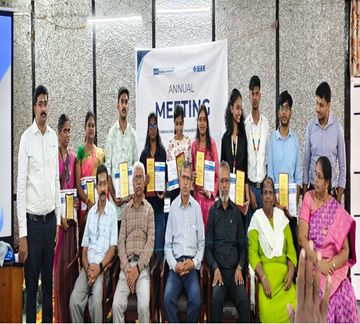
IEEE Student Branch is proud to receive the “Best Student Branch Award” from the IEEE Madras Section. This prestigious recognition was awarded on August 9, 2025. The award acknowledges outstanding performance during the year 2024. It highlights the commitment to expanding IEEE membership and fostering student participation. This achievement stands as a testament to sustained excellence and leadership within the IEEE community.
The IEEE Student Branch proudly received the “Membership Growth Award” for being a Global Top Student Branch Institution. This prestigious honor was conferred by the IEEE Madras Section. The award was presented during the Annual Meet held on September 15, 2025. It recognizes exceptional membership growth achieved during the year 2024. The accomplishment reflects the branch’s strong outreach and engagement initiatives.
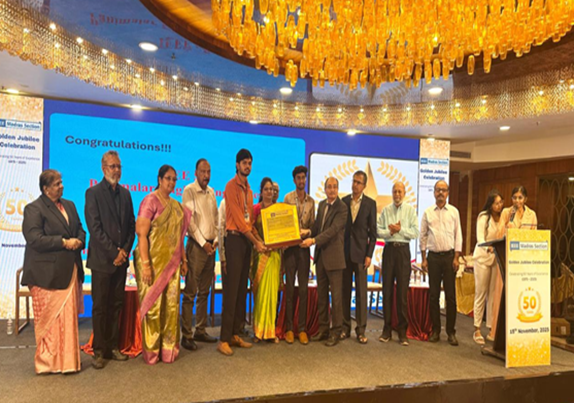

Challapalli Manikantaa and C S Manigandaa of III Year AI&DS have proposed a project idea titled “Development and Implementation of an Intelligent Remote Prenatal Care Monitoring System for Underserved Rural Communities” under “Student Project Funding” Scheme sponsored by IEEE Madras Section and received “Best Project Award”.
Dr. S. Malathi, Professor and Head and IEEE SB Counselor have received “Best Student Branch Counselor” from IEEE Madras Section in the IEEE MAS Awards 2024. And also running the Society with highest student members from the the department of Artificial Intelligence and Data Science.


L. Karthikeyan of IV Year AI&DS have been recognized and volunteered
as an “Ambassador” in the IEEEXtreme 17.0 programming competition
that hosted +17,000 participants 29th October 2023.

Dr. S. Malathi, Professor and Head and IEEE SB Counselor have received the “IEEE Society Stronghold Award” for running the Society with highest student members for the consecutive 4 years and “ICON of Event Management Award” for organizing more events during the Academic Year 2024-25.


Our students were recognized and have received various awards in various events from various IEEE Societies running under IEEE Student Branch – PEC. All the recognized student members are being falicitated in IEEE Day Anniversary Celebration happening every year in the college premises.
Distinguished Guest Visits
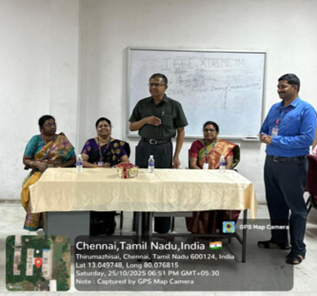
Dr. P. Sakthivel, Chairman, IEEE Madras Section, Chennai, graced Panimalar Engineering College on 25th October 2025. His visit provided valuable insights into advancements and initiatives within the IEEE community..
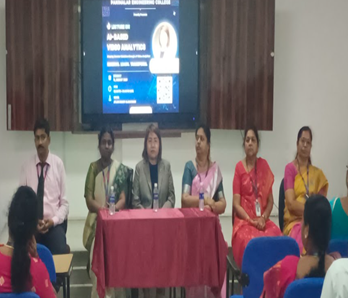
Dr. P. Supavadee, Chairman, IEEE Thailand Section, and Head of the Multimedia Analytics and Research Unit, Department of Electrical Engineering, Chulalongkorn University, Thailand, visited Panimalar Engineering College on 11th August 2025. Her interaction enriched the academic environment through discussions on cutting-edge research and global collaboration.
|
IEEE Xtreme 19.0 - 24 Hours Programming
Contest
|
|
|
Total Number of Teams Registered - 120
|
|
IEEE Xtreme 17.0 - 24 Hours Programming
Contest
|
|
|
Total Number of Teams Registered - 34
|
|
| No. of University Rank (Within 1-100 Band) | 34 Teams |
| No. of Country Rank (Within 1-100 Band) | 11 Teams |
| No. of Region Rank (Within 1-100 Band) | 8 Teams |
| No. of Global Rank (Within 100-200 Band) | 7 Teams |
|
IEEE Xtreme 18.0 - 24 Hours Programming
Contest
|
|
|
Total Number of Teams Registered - 82
|
|
| No. of University Rank (Within 1-200 Band) | 75 Teams |
| No. of Country Rank (Within 1-200 Band) | 22 Teams |
| No. of Region Rank (Within 1-200 Band) | 5 Teams |
| No. of Global Rank (Within 100-200 Band) | 1 Teams |
Funds Sponsored by IEEE Madras Section
| S.No. | Description | Amount Sponsored |
| 1 | Workshop on GenAI – Charting the Future of Artificial Intelligence | Rs. 20000 /- |
| 2 | Best Project under Student Project Funding Scheme | Rs. 5000 /- |
| 3 | Workshop on Machine Learning | Rs. 20000 /- |
| 4 | Workshop on Effective Approach to Solve Societal Engineering Problems in Upcoming Fields | Rs. 10000 /- |
Various Events Conducted through IEEE Computer Society:
Artificial Intelligence (AI) Club
At Panimalar Engineering College, the AI Club stands as a forward-thinking student community driving Artificial Intelligence exploration through immersive workshops, hackathons, and tech discussions. Founded on May 12, 2022, transform theoretical knowledge into practical expertise in AI, machine learning, and intelligent systems, equipping students to innovate and solve complex challenges.
Our dynamic calendar features technical events like AI project showcases and coding challenges, paired with non-technical forums on AI trends, ethics, and career strategies. The club nurtures a collaborative spirit, connecting students with mentors and opportunities to build leadership skills and launch impactful AI careers.
VISION
To cultivate a thriving community of innovative AI leaders who shape the future of technology through creativity, collaboration, and ethical practices.
MISSION
- Foster an inclusive environment where members explore AI applications, solve real-world problems, and build lifelong technical skills.
- Promote ethical AI development and responsible innovation while connecting students with opportunities for research and leadership roles
AI CLUB PILLARS
The "pillars" of the AI Club represent core teams or groups, each with a unique focus and role. They ensure the club operates smoothly, fosters growth, and supports both technical and creative initiatives.
Faculty Co-ordinator
Prof. SHYAMALA P
STUDENT CO-ORDINATORS
| S.No. | POSITION | STUDENT NAME | RESPONSIBILITIES |
| 1. | CLUB VISIONARY | RANJANI A SRINIVASAN SS |
Leads with a future-focused mind-set. Shapes the long-term goals and mission of the AI Club. |
| 2. | CLUB ARCHITECT | NITHYA SREE V SURENDHAR RA |
Strategist and planner. Lays the technical and structural framework of club initiatives, events, and projects. |
| 3. | TECH ELITE | AMRUTH CHANAKAYA A ANEESHWAR S HARI PRAKASH M JAYAKRISHNA M YOGESH MP |
Focuses on technical innovations, project development, and technical workshops. |
| 4. | PIXEL CREW | KALPANA T KARISSHMA P MONASRI S YESHWANTH V |
The creative minds behind design, branding, digital expression, club’s visual identity through media |
| 5. | CHECKPOINT CREW | KOUSHIKA A MITHRA SHREE A SIVASAKTHI S |
Reliable anchors of Event Coordination, Documentation, Feedback Management, Quality Control and Participant Engagement. |
| 6. | CLUB ORBIT | HEMANTH VISHNU | From designing certificates to capturing event moments, they manage key responsibilities with precision. |
| 7. | CLUB CATALYST | DEVADHARSHAN G JAIKERTHE V KANISKA R |
Futuristic Member – energize the club environment by fostering connections and inspiring active participation. |
Detailed Report
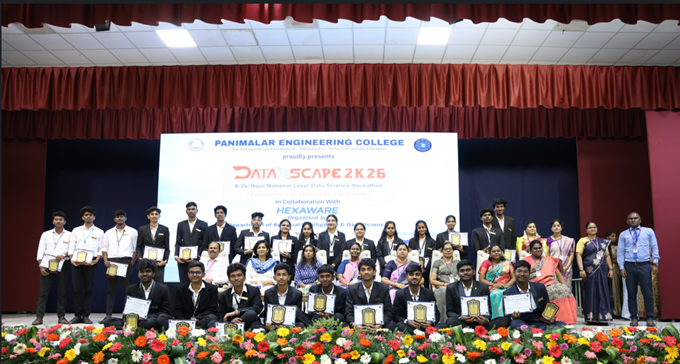
Data Science Club
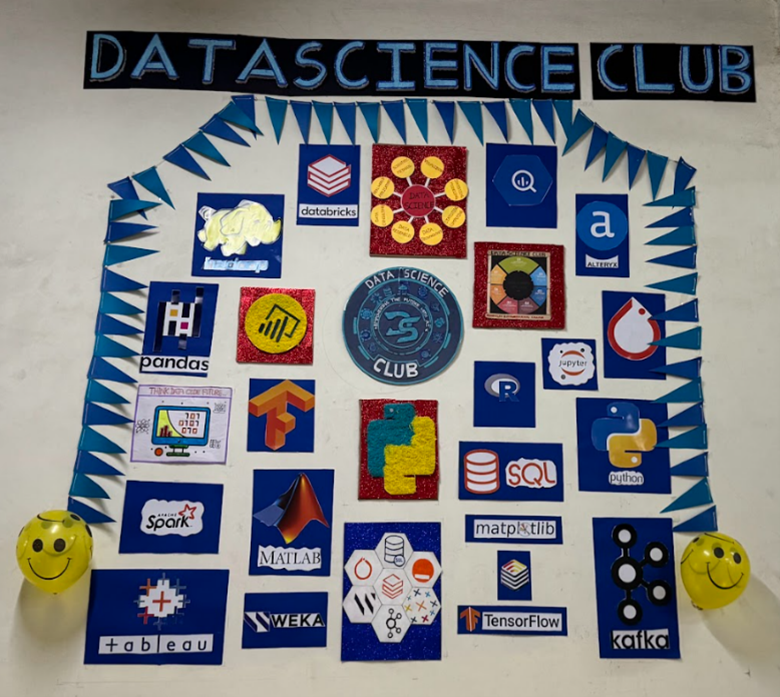
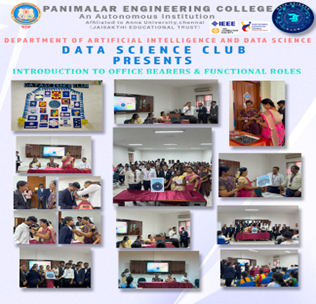
The Data Science Club of Panimalar Engineering College is a dynamic student-driven community dedicated to fostering innovation, analytical thinking, and technical excellence. The club serves as a platform for students to explore the rapidly evolving field of Data Science and gain hands-on experience in solving real-world problems.
With a strong focus on practical learning, collaboration, and industry relevance, the club empowers students to build skills in data analysis, machine learning, visualization, and emerging technologies. The Data Science Club, established on 18.03.2021 in collaboration with Imarticus Learning, aims to harness the growing importance of data science by fostering innovation, technical skills, and analytical thinking among students, enabling them to excel in emerging technological domains.
VISION
To empower students with strong capabilities in data science by enabling them to apply advanced techniques, master computational tools, and develop programming expertise, while fostering meaningful collaborations between academia and industry.
MISSION
To deliver high-quality education in data science by equipping students with essential technical and analytical skills, enhancing their employability, and providing meaningful exposure to industry practices and real-world applications.
FACULTY CO-ORDINATOR
Dr.V. RATHINAPRIYA
STUDENT CO-ORDINATORS
| S.No. | POSITION | NAME |
| 1. | CHAIRPERSON | SWARNALAKSHMI S |
| 2. | VICE CHAIRPERSON | VIJAYAKRISHNAN N A |
| 3. | SECRETARY | KHEERTHANA G |
| 4. | SECRETARY | DHAYANAND T |
| 5. | CHIEF TECHNOLOGY LEAD | SARAVANAN P |
| 6. | TREASURER | RAKSHINI H |
| 7. | DIGITAL OUTREACH LEAD | TAMILARASAN S |
| 8. | DIGITAL OUTREACH LEAD | YOGESH T |
| 9. | COMMUNITY ENGAGEMENT LEAD | KALAIMAGAL S |
| 10. | EDITORIAL & REPORTING LEAD | KALPANA REDDY D |
| 11. | EDITORIAL & REPORTING LEAD | DHARSHINI S |
| 12. | PUBLIC RELATIONS & OUTREACH LEAD | ANTONY AMALA TRINITA J |
| 13. | PUBLIC RELATIONS & OUTREACH LEAD | MOHANAKUMARAN K |
| 14. | ALUMNI & INDUSTRY LIAISON | MOHAMMED AATHIF KHAN A |
| 15. | ALUMNI & INDUSTRY LIAISON | ABDUL FADHIL M |
| 16. | ALUMNI & INDUSTRY LIAISON | ANANDAKUMAR R K |
| 17. | CREATIVE & DESIGN LEAD | VIKNESH S |
| 18. | CREATIVE & DESIGN LEAD | VIGNESH A P |
| 19. | CREATIVE & DESIGN LEAD | PRAVEEN KUMAR K |
| 20. | CREATIVE TEAM -EVENT COORDINATOR | DINESH P |
| 21. | TECH TEAM-EVENT COORDINATOR | HARI HARAN K |
| 22. | TEAM OPERATIONS - EVENT COORDINATOR | GEATTAM DHANUSH |
| 23. | TECH TEAM-EVENT COORDINATOR | GAUTHAMKUMAR U |
| 24. | FINANCIAL OPERATIONS-EVENT COORDINATOR | AMUDALA BHADDRESH |
| 25. | CAPTURE CREW - EVENT COORDINATOR | GOKUL M |
| 26. | TECH TEAM-EVENT COORDINATOR | SRIRAM K |
What We Do
The club offers a wide range of activities designed to ensure continuous learning and engagement:
WORKSHOPS & TRAINING
We conduct hands-on sessions on:
• Python for Data Science
• Data Analysis using Pandas and NumPy
• Data Cleaning & Data Wrangling
REAL-TIME PROJECTS
Students work in teams on real-world projects, gaining practical exposure and
building strong portfolios with guidance and regular reviews.
EXPERT TALKS & GUEST LECTURES
Industry experts and alumni share insights on:
• Data Visualization
• AI & Machine Learning trends
• Career opportunities in Data Science
COMPETITIONS & HACKATHONS
We organize:
• Hackathons
• Data Challenges
• Coding Competitions to enhance creativity, teamwork, and problem-solving
skills.
TOOLS & TECHNOLOGY
Training sessions are conducted on industry tools like:
• Tableau
• Power BI
WEEKLY ENGAGEMENT
• Data challenges and visualization tasks
• Fun Fact Fridays on social media
PUBLICATIONS
• Annual Club Magazine
Detailed Report
AUGMENT REALITY AND VIRTUAL REALITY CLUB
The AR/VR Club is a dynamic platform dedicated to exploring the transformative world of Augmented Reality (AR) and Virtual Reality (VR) technologies. The club aims to nurture innovation, creativity, and technical expertise by empowering students to design immersive digital experiences that bridge the gap between the physical and virtual worlds.
With rapid advancements in immersive technologies across industries such as healthcare, education, gaming, architecture, and entertainment, the AR/VR Club serves as a hub for learning, experimentation, and real-world application.
The AR/VR Club established on 4.10.2023 aims to foster innovation, learning, and collaboration in the fields of Augmented Reality (AR) and Virtual Reality (VR) among engineering students.
VISION
To become a leading hub of AR/VR expertise within the engineering community, driving technological advancements and inspiring the next generation of innovators.
MISSION
To foster innovation and collaborative learning in AR/VR by providing hands-on training, industry exposure, and skill development opportunities. The club aims to equip students with technical competencies and problem-solving abilities to develop real-world AR/VR solutions while promoting continuous learning and professional growth
Detailed Report
AURA Club
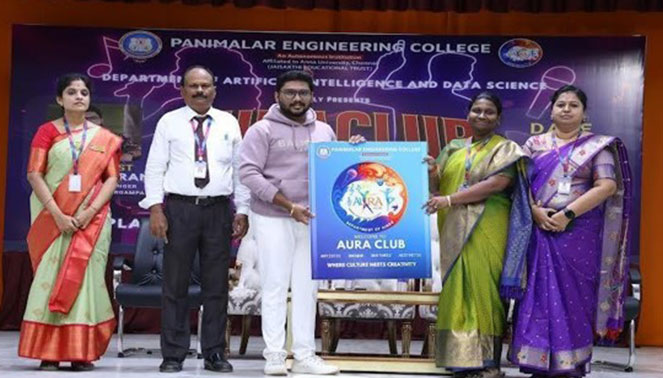
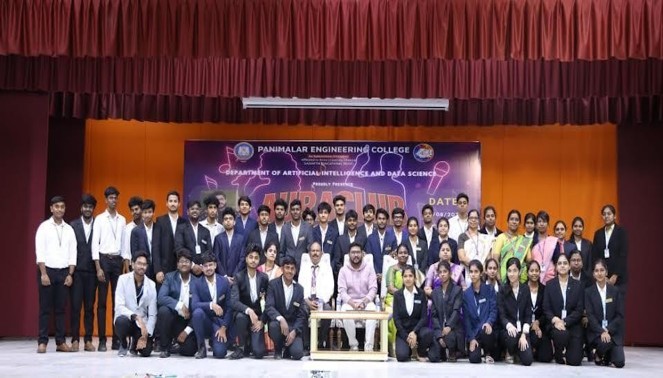
AURA CLUB is a dynamic student-driven initiative of Panimalar Engineering College, established on 4th August 2022 with the objective of promoting creativity, innovation, and holistic development among students. The name AURA represents Artistic, Unique, Rhythmic, and Aesthetic, reflecting the club’s focus on nurturing diverse talents and encouraging self-expression.
The club primarily emphasizes non-technical activities, providing students with a platform to explore their abilities beyond academics. Through the organization of culturals, celebrations, competitions, and campus-wide events, Aura Club creates an engaging and inclusive environment that motivates students to actively participate and showcase their skills.
Aura Club aims to foster creativity, teamwork, and leadership among students while enhancing their communication, interpersonal, and organizational abilities. By conducting diverse events and interactive sessions, the club encourages collaboration and builds confidence among participants.
Aligned with its vision, the club strives to create an inclusive space where every student can discover and develop their individual talents. Its mission is to organize meaningful and participatory activities that contribute to students’ overall growth and development.
Overall, Aura Club plays a significant role in enriching campus life by providing opportunities for experiential learning and personal growth, thereby helping students develop into well-rounded individuals prepared for future professional and social challenges.
VISION
To build an inclusive environment that enables every student to discover and develop their individual talents. The club aims to promote holistic growth through diverse non-technical activities and opportunities. It strives to enhance students’ intellectual, creative, and interpersonal skills beyond traditional academic learning
MISSION
To organize and execute a wide range of non-technical, culturally enriching, and participatory events for students. The club aims to encourage creativity, teamwork, and leadership through structured activities and opportunities. It seeks to provide a platform where students can actively engage, collaborate, and develop essential skills beyond academics.
Objective
- To facilitate holistic student development by providing structured opportunities for participation in co-curricular and extracurricular activities, thereby enhancing creativity, innovation, and self-expression.
- To develop professional competencies such as leadership, teamwork, communication, and critical thinking through systematic planning, organization, and execution of events and activities.
- To integrate academic learning with practical exposure by organizing technical and non-technical events that promote experiential learning, problem-solving skills, and real-world application of knowledge.
FACULTY CO-ORDINATORS
| S.No. | FACULTY NAME | DESIGNATION |
| 1. | Prof.S.SWATHI | Assistant Professor |
| 2. | Prof. R VIDHYA MUTHULAKSHMI | Assistant Professor |
| 3. | Prof.Dr. S. RENUGA | Associate Professor |
STUDENT CO-ORDINATORS
| S.No. | STUDENT NAME | ROLE |
| 1. | HARIVISHNU K C | PRESIDENT |
| 2. | HARSHAVARTHINI T | |
| 3. | HARI PREETH S K | VICE PRESIDENT |
| 4. | KAKU KRISHNA PRIYA | |
| 5. | HARIPRASAANTH K | SECRETARY |
| 6. | SWEETY VINCENT | |
| 7. | FARIH M D | TREASURER |
| 8. | ALLEN JOSH A | |
| 9. | SURYA K | CHIEF EVENT COORDINATORS |
| 10. | HEPZHIBHA RACHEL S | |
| 11. | HARISH J | CULTURAL COORDINATORS |
| 12. | BOOMIGA V | |
| 13. | GURUCHARAN G | CREATIVE & DESIGN LEAD |
| 14. | MOHAMMAD ARSHAD | |
| 15. | GAUTHAM E | |
| 16. | SHARAN | MEDIA TEAM |
| 17. | SUPREIT L |
Detailed Report
Sustainable development Goals (SDG) Club
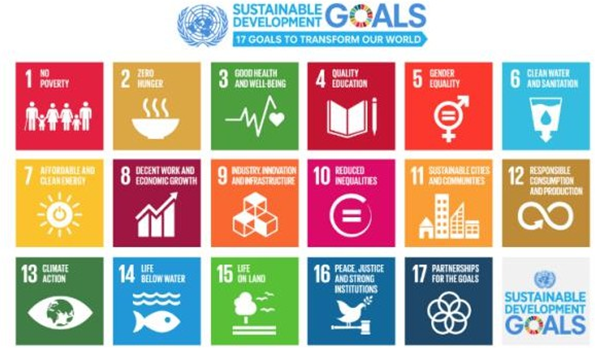
The significance of sustainable development and environmental responsibility has become increasingly vital in today’s world. The SDG Club, established on 22.01.2024, marks a progressive step towards promoting sustainability initiatives among students. This initiative aims to foster environmental awareness, encourage responsible practices, and inspire active participation in building a cleaner, greener, and more sustainable future.
VISION
To empower students to become responsible and proactive global citizens who contribute to a sustainable, inclusive, and equitable world. Through eco-friendly initiatives, awareness campaigns, social engagement, and the innovative application of their skills, students will drive meaningful change and transform the world, shaping a brighter and more inclusive future for all.
MISSION
The mission of the SDG Club is to engage and inspire students to take active steps toward global sustainability and social equity by promoting eco-friendly practices, fostering awareness, supporting community initiatives, and leveraging their skills and creativity to drive positive change and transform the world.
Objective
- To promote awareness and understanding of the United Nations Sustainable Development Goals among students through structured programs, workshops, and awareness campaigns.
- To encourage the adoption of sustainable and eco-friendly practices within the department, fostering responsible environmental behavior among students.
- To integrate academic knowledge and technical skills with real-world applications, enabling students to address societal and sustainability challenges effectively.
- To enhance students social responsibility and community engagement through participation in outreach activities, thereby contributing to inclusive and equitable development.
- To develop leadership, innovation, and teamwork skills among students by involving them in SDG-oriented projects, research, and club activities.
ADHERENCE TO COLLEGE SDG POLICY
The Department Artificial Intelligence and Data Science is constant to advancing the Sustainable Development Goals through ethical, inclusive, and responsible use of AI and data-driven technologies. The department integrates SDG-focused problems into curriculum, research and innovation activities. Students and faculty are encouraged to develop AI solutions addressing societal, environmental, and economic challenges. Data privacy, fairness, transparency, and sustainability are upheld in all AI and analytics practices. Collaborations with industry, government, and communities are promoted to ensure real-world SDG impact.
ROLE OF OUR STUDENTS
Artificial Intelligence and Data Science students play a transformative role in achieving the Sustainable Development Goals (SDGs) by leveraging data-driven insights, intelligent automation, and predictive technologies. Their contributions span social, economic and environmental dimensions of sustainable development.
17 SUSTAINABLE DEVELOPMENT GOALS (SDG’s)
1. NO POVERTY
2. ZERO HUNGER
3. GOOD HEALTH AND WELL-BEING
4. QUALITY EDUCATION
5. GENDER EQUALITY
6. CLEAN WATER AND SANITATION
7. AFFORDABLE AND CLEAN ENERGY
8. DECENT WORK AND ECONOMIC GROWTH
9. INDUSTRY, INNOVATION, AND INFRASTRUCTURE
10. REDUCED INEQUALITIES
11. SUSTAINABLE CITIES AND COMMUNITIES
12. RESPONSIBLE CONSUMPTION AND PRODUCTION
13. CLIMATE ACTION
14. LIFE BELOW WATER
15. LIFE ON LAND
16. PEACE, JUSTICE, AND STRONG INSTITUTIONS
17. PARTNERSHIPS FOR THE GOALS.
Detailed Report
Indian Knowledge Systems(IKS) Club
About IKS
AURA CLUB is a dynamic student-driven initiative of Panimalar Engineering College, established on 4th August 2022 with the objective of promoting creativity, innovation, and holistic development among students. The name AURA represents Artistic, Unique, Rhythmic, and Aesthetic, reflecting the club’s focus on nurturing diverse talents and encouraging self-expression.
Indian Knowledge Systems (IKS) represent the vast and profound intellectual heritage developed in India over thousands of years. Rooted in the cultural, philosophical, and scientific traditions of the country, IKS encompasses a wide range of disciplines including mathematics, astronomy, medicine, agriculture, architecture, linguistics, arts, and spirituality. Unlike fragmented approaches to knowledge, Indian systems emphasize a holistic understanding that integrates theoretical insights with practical applications, thereby creating a balanced framework for learning and living. This traditional body of knowledge continues to be relevant in the modern world, offering sustainable and ethical solutions to contemporary challenges.
At its core, IKS is characterized by its emphasis on harmony between human beings and nature. Ancient Indian scholars recognized the interconnectedness of all living and non-living entities and developed knowledge systems that promote sustainability and environmental balance. Practices such as Ayurveda, which focuses on natural healing and preventive healthcare, and traditional agricultural methods that conserve biodiversity and soil fertility, are prime examples of this ecological wisdom. These principles align closely with today’s global emphasis on sustainable development and environmental conservation, making IKS highly significant in addressing modern ecological concerns.
One of the most remarkable aspects of Indian Knowledge Systems is their contribution to scientific and mathematical advancements. Ancient Indian mathematicians made ground-breaking discoveries in areas such as algebra, geometry, and arithmetic, including the concept of zero and the decimal system, which are fundamental to modern computing and data science. Similarly, Indian astronomers developed sophisticated models to study planetary motion and celestial phenomena, demonstrating advanced observational and analytical skills. These contributions not only highlight the scientific rigor of ancient India but also provide valuable insights that can inspire modern research and innovation.
In the context of the Department of Artificial Intelligence and Data Science, IKS offers a unique perspective for integrating traditional knowledge with modern technological advancements. Concepts such as logical reasoning, pattern recognition, and systematic analysis, which are inherent in ancient Indian texts, closely align with the principles of artificial intelligence and machine learning. For instance, the structured grammar of the Sanskrit language, developed by scholars like Panini, is considered one of the earliest forms of formal language systems and has significant relevance in natural language processing (NLP). By exploring such connections, students and researchers can develop innovative AI models that are both efficient and culturally grounded.
The integration of IKS into modern education is strongly supported by the National Education Policy (NEP) 2020, which emphasizes the importance of interdisciplinary learning and the inclusion of indigenous knowledge in academic curricula. NEP 2020 recognizes that education should not only impart technical skills but also foster ethical values, critical thinking, and cultural awareness. By incorporating IKS into the curriculum of AI and Data Science, institutions like Panimalar Engineering College can provide students with a well-rounded education that combines technical expertise with a deep understanding of India’s intellectual heritage.
Another significant dimension of IKS is its focus on holistic development. Unlike conventional education systems that often prioritize academic performance alone, IKS encourages the development of physical, mental, emotional, and spiritual well-being. Practices such as yoga and meditation, which are integral to Indian traditions, enhance concentration, reduce stress, and improve overall productivity. These practices are particularly beneficial for students in demanding fields like AI and Data Science, where cognitive abilities and mental clarity play a crucial role in problem-solving and innovation.
Indian Knowledge Systems also emphasize ethical values and moral responsibility, which are essential in today’s technology-driven world. As artificial intelligence and data science continue to influence various aspects of society, ethical considerations such as data privacy, fairness, and accountability have become increasingly important. The ethical principles embedded in IKS, including honesty, integrity, and social responsibility, can guide the development and application of technology in a manner that benefits society as a whole. By integrating these values into technical education, institutions can nurture responsible engineers and data scientists who are committed to using technology for the greater good.
The establishment of the IKS Club in the Department of Artificial Intelligence and Data Science at Panimalar Engineering College serves as a platform to promote awareness and understanding of these traditional knowledge systems. The club aims to bridge the gap between ancient wisdom and modern technology by organizing various activities such as workshops, seminars, guest lectures, and research projects. These initiatives encourage students to explore the relevance of IKS in contemporary fields and to develop innovative solutions that address real-world problems.
Through active participation in the IKS Club, students gain exposure to interdisciplinary learning and develop skills that go beyond conventional academic boundaries. They are encouraged to undertake projects that combine traditional knowledge with modern computational techniques, such as developing AI-based models inspired by Ayurvedic diagnostics or applying Vedic mathematical principles to optimize algorithms. Such initiatives not only enhance technical proficiency but also foster creativity, critical thinking, and innovation.
Furthermore, the IKS Club plays a vital role in preserving and promoting India’s cultural heritage. In an era of globalization, where rapid technological advancements often overshadow traditional practices, it is essential to maintain a connection with our roots. By creating awareness about the significance of Indian knowledge systems, the club helps students appreciate the richness of their cultural heritage and inspires them to contribute to its preservation and dissemination. This sense of cultural identity and pride is crucial for building a strong and confident generation of professionals.
In addition to fostering innovation, IKS also promotes global knowledge exchange and collaboration. As the world increasingly recognizes the value of indigenous knowledge systems, there is a growing interest in exploring and integrating these systems into global research and development initiatives. By engaging with IKS, students and researchers can contribute to international collaborations and gain recognition on a global platform. This not only enhances the reputation of the institution but also opens up new avenues for academic and professional growth.
In conclusion, Indian Knowledge Systems represent a timeless and invaluable repository of knowledge that continues to be relevant in the modern world. By integrating IKS with contemporary fields such as Artificial Intelligence and Data Science, educational institutions can create a dynamic and holistic learning environment that fosters innovation, sustainability, and ethical responsibility. The IKS Club at Panimalar Engineering College plays a crucial role in this endeavor by providing a platform for students to explore, learn, and apply traditional knowledge in modern contexts. Through this initiative, the department aims to nurture future-ready professionals who are not only technically competent but also culturally aware, ethically grounded, and socially responsible.
Objective of the Club
- Create awareness and promote the significance of Indian Knowledge Systems (IKS) by preserving and disseminating India’s rich cultural and scientific heritage among students.
- To integrate traditional Indian knowledge with modern domains such as Artificial Intelligence and Data Science, encouraging interdisciplinary learning and innovative thinking.
- To enhance students’ analytical, logical, and problem-solving abilities by applying principles derived from ancient Indian knowledge systems.
- To encourage research, project development and innovation by utilizing IKS concepts in areas like sustainability, healthcare, environment, and emerging technologies.
- To inculcate ethical values, social responsibility, and holistic development in students, aligned with the vision of NEP 2020.
- To organize academic and co-curricular activities such as workshops, seminars, guest lectures, and competitions, fostering collaboration among students, faculty, and industry experts.
Detailed Report
Faculty Attended FDP Details
|
ACADEMIC YEAR
|
TOTAL NO FACULTY
|
NO OF FACULTY ATTENTED
|
NO OF FDP/STTP ATTENTED
|
|
2025-2026* |
75 |
44 |
61 |
|
2024-2025 |
61 |
58 |
98 |
|
2023-2024 |
37 |
35 |
51 |
|
2022-2023 |
15 |
15 |
26 |
FDP/STTP Organized by the Department
|
S.No.
|
Name of the Program
|
Date of the Program
|
Duration of the Program
|
Name of the Speaker & Designation and
Organization
|
No. of People Attended
|
|
2025-26* |
|||||
| 1. | Five Days FDP on iOS & Swift Hands-On Training Program | 17.11.2025 - 21-11-2025 |
5 Days |
1. Mr. Nallaperumal T Trainer, iOS & Android Hexaware Technology 2. Mr. Abdul Jaafar iOS Engineer @ MUVI.com |
50 |
| 2. | Generative AI in Collaboration with Intel | 18.08.2025 - 22.08.2025 | 5 Days |
1. Dr.Mala Karla, Assistant Professor CSE NITTTR, Chandigarh 2. Dr.C.Rama Krishna, Assistant Professor CSE NITTTR, Chandigarh |
36 |
|
2024-25
|
|||||
| 1. | ATAL Technical FDP on Immersive Technology Exploring Augmented Reality and Virtual Reality | 21.10.2024 - 26-10-2024 |
6 Days | 1. Dr. K. Abhishek Kumar Sr. Design Instructor, National Institute of Design, AP 2. Dr. Jagadeesh Kakarla Assistant professor IIITDM Kancheepuram 3.Dr. J. Prabhu Professor, SCOPE Vellore Institute of Technology 4. Mr. SathyaPriyan AR/VR Madras Mindworks Pvt 5.Dr. S. Godfrey winster Professor, Computer Networking SRM Institute of Science and Technology, Kattankulathur 6.Dr. C. Bharanidharan, Associate Professor, AI&DS Panimalar Engineering College 7.Dr. N. Sivakumar Associate Professor, AI&DS Panimalar Engineering College |
60 |
| 2. | STTP on AI and Data Analytics for Healthcare: Transforming the future of Medicine |
09.06.2025-14.06.2025 | 6 Days | 1. Mr. Chinnajee Rao Technical Architect (SRE/Devops)/AWS Digital Engineering & Assurance LTIMindtree Limited 2.Mr. Baranidharan AI prompt engineer Xtransmatrix, Chennai. 3. Mr. R. Raj Arun Associate Director – AI Engineering Fractal Analytics, Chennai. 4. Dr. T. Preethiya Assistant Professor, Computer Networking SRM Institute of Sciecne and Technology, Kattankulathur 5. Mr. S. Premanand Assistant Professor, SCOPE VIT University, Chennai. 6. Dr. E. Bhuvaneswari Associate Professor, AI&DS Panimalar Engineering College 7.Dr. S. Jacily Jemila Associate Professor, CSE Saveetha University, 8. Dr. R. Manoj Kumar Professor, SCOPE Vellore Institute of Technology 9. Mr. Joab Eilot Backend Engineer, Stablish Solutions, North Carolina 10. Dr. K. Jayashree Professor, AI&DS Panimalar EngineeringCollege 11.Dr. S. Sivakannan, Associate Professor, Advanced Computing Department of Advanced Computing, St. Joseph’s University, Bengaluru. |
60 |
| 3. | FDP on Harnessing Intelligent Systems: Accelerating Digital Evolution in the Industry 5.0 Framework | 23.06.2025-28.06.2025 | 6 Days | 1.Ms. J. Mamtha Systems Administrator Tata Consultancy Services 2.Mr. N.D. Kanishk, Artificial Intelligence and Machine Learning Specialist Prodapt 3.Dr. R. Geetha Professor & Head, CSE, S.A. Engineering college 4.Mr. V. Yuvaraj Director, JKV Robotics Research Lab 5.Dr. C.M Nalayini Assistant Professor, IT Velammal engineering College 6.Mrs. N. Nithya Rani Assistant Professor, E&I Sri Sai Ram Engineering College 7.Dr. S. Veena Professor, CSBS SRM Institute of Science and Technology, Ramapuram 8.Dr. B. Barath, Associate Professor, CSE SSN College of Engineering 9.Dr. W. Gracy Theresa Professor, AI&DS Panimalar Engineering College 10. Ms. Kavya. S Senior Data Associate American Telephone and Telegraph Company (AT&T), North Carolina, California 11.Mr. P. Balaji Senior Development Manager Virtual tech, Chennai. 12.Mr. Arun Ramachandran Sukumaran, Technical Specialist, Bosch |
65 |
|
2023-24
|
|||||
| 1 | Anna University Sponsored FDP on Deep Learning | 21.08.2023- 26.08.2023 |
6 Days | 1. Dr. Priya Vijay Professor & Head, IT Rajalakshmi Engineering College. 2. Dr. Dhalia Sam Professor, IT Dr.M.G.R. Education and Research Institute 3. Dr. S. Malathi Professor & Head, AI&DS Panimalar Engineering College 4. Dr. K. Jayashree Professor, AI&DS Panimalar Engineering College 5. Dr. R. Babu Assistant Professor, Computational Intelligence SRM Institute of Science and Technology, Kattankulathur 6. Dr. W. Gracy Theresa Professor, AI&DS Panimalar Engineering College 7. Dr. R. Chithambaramani Associate Professor, CSE Vel Tech Rangarajan Dr. Sagunthala R&D Institute of Science and Technology 8. Dr. S. Prithi Associate Professor, Computational Intelligence SRM Institute of Science and Technology, Kattankulathur 9. Dr. K. Saranya Assistant Professor, ECE S.R.M. Easwari Engineering 10. Dr. V. Sathya Assistant Professor, AI&DS Panimalar Engineering College 11. V Banu Rekha Senior Developer, Steps Software Solutions,Chennai. |
60 |
| 2 | FDP on Future Transformation : Leveraging GEN - AI | 20.05.2024- 25.05.2024 |
6 Days | 1. Mr. Janarthanan Selvaraj Senior Specialist and Eviden Expert AI Eviden 2.Mr. A. Abuthahir NLP Researcher Zoho Corporation 3. Mr. Arun K Prasad Consultant Architect SopraSteria. 4. Dr. C. Nalayini Assistant Professor, Velammal Engineering College Chennai. 5. Mr. S.P. Dinesh Member Technical staff Zoho Corporation |
55 |
|
2022-23
|
|||||
| 1. | FDP on Business Analytics | 26.12.2022- 31.12.2022 |
6 Days | 1.Mr. A. Balaji Ganesh, Professor, Dean(Research) Vellamal Engineering College, Chennai 2. Dr. A. Kathiravel, Professor, DCSE Karunya Institute of Tech & Sciences Coimbatore 3. Ms. R. Sowndariya Marketing Manager, Arjun Vision Tech Solutions 4. Dr. G. Nalini Priya Professor, IT Saveetha Engineering College 5. Dr. K. Ramesh Kumar Professor & Head, IT Bharath institute of Higher Education and Research 6. Mr. R Sri Balaji Aravind, Co-Founder Arjun Vision Tech Solutions 7. Dr. A. Kannan Senior Professor, SCOPE Vellore Institute of Technology 8. Dr. N. Ganesh Associate Professor-Senior, SCOPE Vellore Institute of Technology, Chennai 9. Dr. S. K. Muthusundar Professor, AI&DS Chennai Institute of Technology |
50 |
| 2. | FDP on Computer Vision for Healthcare, Mobility & Surveillance Systems | 15.05.2023-20.05.2023 | 6 days | 1.Dr. V.D. Ambeth Kumar, Associate Professor, CSE Mizoram University 2.Dr. M. Prakash Associate Professor, SCOPE Vellore Institute of Technology 3.Dr. Priya Vijay Professor, CSE Rajalakshmi Engineering College. 4.Dr. R. Babu Assistant Professor Computational Intelligence SRM Institute of Science and Technology, Kattankulathur 5. Dr. P. Nancy Assistant Professor Department of Networking Technologies SRM Institute of Science and Technology, Kattankulathur 6. Dr. K. Jayashree Professor, AI&DS Panimalar Engineering College |
55 |
Pearson VUE Authorized Test Centre
Panimalar Engineering College is , an authorized Pearson VUE Test Centre, conducts global certification examinations and is one of only three institutions to hold this distinction, with the center located within the campus of Panimalar Engineering College. This exam center was inaugurated on September 2023 and is well-equipped with all necessary technical specifications, ensuring a smooth and efficient testing experience. Pearson VUE certifications play a crucial role in empowering professionals worldwide, contributing significantly to public protection, technological advancement, and the overall progress of future generations. The significance of professional certification is evident in its real-life impacts. Pearson VUE supports this by providing comprehensive testing services throughout the exam lifecycle, helping candidates move from potential to progress and elevating certification or licensure programs to new heights. As a key partner in testing, Pearson VUE delivers millions of exams annually, continuously innovating secure exam delivery and testing methods to help achieve collective goals. They emphasize the potential for growth in every individual, believing that personal development not only enriches oneself but also positively impacts professions, communities, and lives globally.
Through a vast network of test centers and partnerships across virtually every industry, Pearson VUE delivers high-stakes exams, enabling the certification and licensure of individuals who contribute to safeguarding and advancing their communities. Pearson VUE helps prepare testing candidates with various resources, including courseware, scenario-based labs, practice tests, and more.The center at Panimalar Engineering College specifically hosts major certification exams from renowned organizations such as Microsoft, Oracle, AWS, EMC, and Cisco, providing candidates with the opportunity to book slots and take their exams at this convenient location.

Approval letter for Pearson Test
centre.
Committee Members:
Dr.S.Malathi
Test Centre Co-Ordinator
Professor & Head
Department of AI-DS
Panimalar Engineering College.
Dr.C.Bharanidharan
Certified TA Administrator
Assistant Professor
Department of AI-DS
Panimalar Engineering College.
Mr.C.VIVEK
Certified TA Administrator
Assistant Professor
Department of AI-DS
Panimalar Engineering College.
Certificate issued by Pearson to Act as TA


Software and Hardware Equipment’s Used for Pearson
| S.No. | Equipments | Cost |
| 1. | Logitech Pro C920 Pro HD Webcam | Rs. 6,900.00 |
| 2. | ePadLink: ePad Signature Pad- Model VP9851 | Rs. 30,000.00 |
| TOTAL | Rs. 36,900 | |


| S.No. | Certification Type | Total Number of Candidates |
| 1. | INTERNATIONAL EXAMS FOR COMPUTER PROFESSIONAL | 450 |
| 2. | INTERNATIONAL EXAMS FOR DOCTORS | 125 |
Amount Credited by Pearson to Our College
| S.No. | Year | Amount |
|
1 |
2023-2024 | Rs1,99,338.50 |
|
2 |
2024-2025 | Rs 2,58,269.50 |
|
3 |
2025-2026 * | RS 1,09,828.50 |
Value Added Course
Our department integrates value added course with curriculum to facilitate the students to enhance their standards beyond the level of curriculum, to build their own employability skill, to bridge the skill gap and to make the students industry ready student.
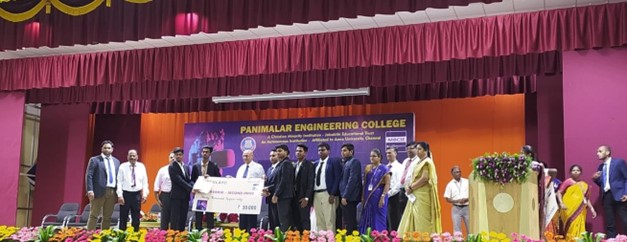
"Build your Metaverse" with Munjal Birmingham City University
2025 -2026*
| S.No. | Course Name | Staff Co-ordinator | Year of Student |
|
1. |
R-Programming | Mrs.R.Sandhiya | II –YEAR |
|
2. |
Metaverse | Dr.C.Bharanidharan | III-YEAR |
| 3. | iOS Mobile Application Development | Mr.Sasidharan | III-YEAR |
2024 -2025
| S.No. | Course Name | Staff Co-ordinator | Year of Student |
|
1. |
Build your Metaverse |
Dr. C.Bharanidharan |
Third Year |
|
2. |
R Programming |
Mrs.V.Rekha |
Third Year |
2023 -2024
| S.No. | Course Name | Staff Co-ordinator | Year of Student |
|
1. |
Build your Metaverse |
Dr. C.Bharanidharan |
Third Year |
|
2. |
R Programming |
Mrs.S.Vimala |
Third Year |
|
3. |
Communication Skills and Verbal Skills |
Mr Amos |
Second Year |
|
4. |
Web designing and Adobe Flash |
Dr.M.S.Maharajan |
Second Year |
|
5. |
Basics of Coral Draw, Adobe Photoshop & Canva |
Dr.P.Kavitha & Dr. C.Bharanidharan |
Second Year |
2022 -2023
| S.No. | Course Name | Staff Co-ordinator | Year of Student |
|
1. |
Build your Metaverse |
Dr. C.Bharanidharan |
Third Year |
Gallery
Department Survey Forms




Question Bank – Academic Year 2026-27 (Odd Semester)
| YR/SEM | SUBJECT CODE |
SUBJECT TITLE
|
GOOGLE SITE LINKS
|
| II yr/ III sem | 23MA1304 |
MATHEMATICAL FOUNDATIONS FOR ARTIFICIAL INTELLIGENCE
|
|
| 23AD1301 |
INTERNALS OF COMPUTER SYSTEMS
|
||
| 23AD1302 |
ARTIFICIAL INTELLIGENCE AND EXPERT SYSTEMS
|
||
| 23AD1303 |
OBJECT ORIENTED PROGRAMMING PARADIGM
|
||
| 23CS1303 |
DATABASE MANAGEMENT SYSTEMS
|
||
| III yr/ V sem | 23AD1501 |
FORMAL LANGUAGE AND AUTOMATA THEORY
|
|
| 23AD1502 |
DATA COMMUNICATION & NETWORK SECURITY
|
||
| 23IT1923 |
FULL STACK WEB DEVELOPMENT
|
||
| 23CS1908 |
QUANTUM COMPUTING
|
||
| 23AD1505 |
DATA EXPLORATION AND VISUALIZATION
|
||
| 23AD1506 |
DATA ANALYTICS
|
||
| 23AD1507 |
KNOWLEDGE ENGINEERING AND INTELLIGENT SYSTEMS
|
||
| IV yr/ VII sem | 23AD1701 |
Augmented Reality and Virtual Reality with AI
|
|
| 23ML1702 |
Natural Language Processing
|
||
| 23AD1908 |
Big Data Management
|
||
| 23IT1906 |
Software Testing and Automation
|
||
| 23AD1702 |
AI and Robotics (Lab Integrated)
|
||
| 23IT1905 |
DevOps
|
||
| 23AD1907 |
Ethics and AI
|
Faculty Video Lectures
| S.No. | Faculty Name | Topic | E-Content link |
|
1. |
Mrs.J.Anitha | Data Analysis in Data Science | https://www.youtube.com/watch?v=bTR235lTBMo&t=3s |
|
2. |
Mrs.S.Vimala | looping in python | https://www.youtube.com/watch?v=oEknDWN4TDk&t=40s |
|
3. |
Dr.P.Rajeswari | Introduction of Machine Learning | https://www.youtube.com/watch?v=Mhhus_AoLi8 |
|
4. |
Dr.C.Bharanidaran | Robot Locomotion | https://www.youtube.com/watch?v=ZC_R0G52Gfw |
|
5. |
Dr.K.Jayashree | Image Processing and Computer Vision Basics | https://youtu.be/1gbo2X7Bd4c |
|
6. |
Dr.T.Kalaichelvi | Functional Dependency in Database Management Systems (DBMS) | https://www.youtube.com/watch?v=5UixQTBYKiU |
|
7. |
Dr.C.Vivek | Advanced Testing Concept | https://youtu.be/hIlE9Ckqckw?si=6nM5XLAIkzaphnpb |
|
8. |
Dr.T.Selva Banu Priya | Introduction to Big Data | https://youtu.be/_S0_RRipKCE?si=rcxT4Cf1SeOS17ee |
|
9. |
Mrs. S. Padma Priya | Basic of Data Science | https://youtu.be/LRbYytvGwL4?si=yP1V9O4MYxtVUAaG |
|
10. |
Mrs.S.Swathi | Decision Tree ID3 Algorithm | https://www.youtube.com/watch?v=hZmMphZwimA |
|
11. |
Mrs.C.Gomathi | Linear Regression | https://www.youtube.com/watch?v=0hObYRW4Gkg |
|
12. |
Dr.E.Bhuvaneswari | EAI | https://www.youtube.com/watch?v=ZgoqzgyJu4o |
|
13. |
Dr.S.Chakaravarthi | AI vs ML vs DL vs DS | https://www.youtube.com/watch?v=7BbetPbKT2c |
|
14. |
Dr.C.Gnanaprakasam | Software Development & Practices | https://www.youtube.com/watch?v=vv7tR-ioZBE |
|
15. |
Dr.N.Sivakumar | VR & AR | https://www.youtube.com/watch?v=a56eiNSxgGY |
|
16. |
Dr.I.Thamarai | Software Testing Automation | https://www.youtube.com/watch?v=Ajej9O7bT0I |
|
17. |
Dr.T.Veeramani | NLP - Natural Language Processing | https://youtu.be/jnxD25x5hP0](https://youtu.be/jnxD25x5hP0) |
|
18. |
Dr.V.Rathinapriya | Mixed Reality - ARVR | https://www.youtube.com/watch?v=i-PRcrwtQVk |
|
19. |
Dr.D S SHAJI | Logical Agent | https://www.youtube.com/watch?v=G_TwoREISrY |

AI&DS Department Library Details
| Item | Details |
| Area | 104 Sq.m. |
| No. of Volumes | 1043 |
| No. of Titles | 352 |
| No. of Total Technical Journals(Scopus -National) | 19 (Available Central Library-I) |
| No. of Reprints(International Journals) | 07 (Available Central Library-I) |
| No.of Computers | 01 |
| No. of E-Journals | 05(IEEE-ASPP/IEEE-POP/ELSIVIER-SCOPUS/ DELNET/EBSCOHOST |
| No.of E-Books | 01 (MGH) |

E-Resources(E-journals / E-Books)
Click Here

Remote Access Resources
Click
Here