


About the Department
Vision and Mission
PEO,PO’S,PSO’S
HOD Profile
Faculty List
Milestone
Professional Society
Clubs
Events
Newsletter & Magazines
Survey Forms
Question Bank
ECE Video Lectures
Gallery
Department Library
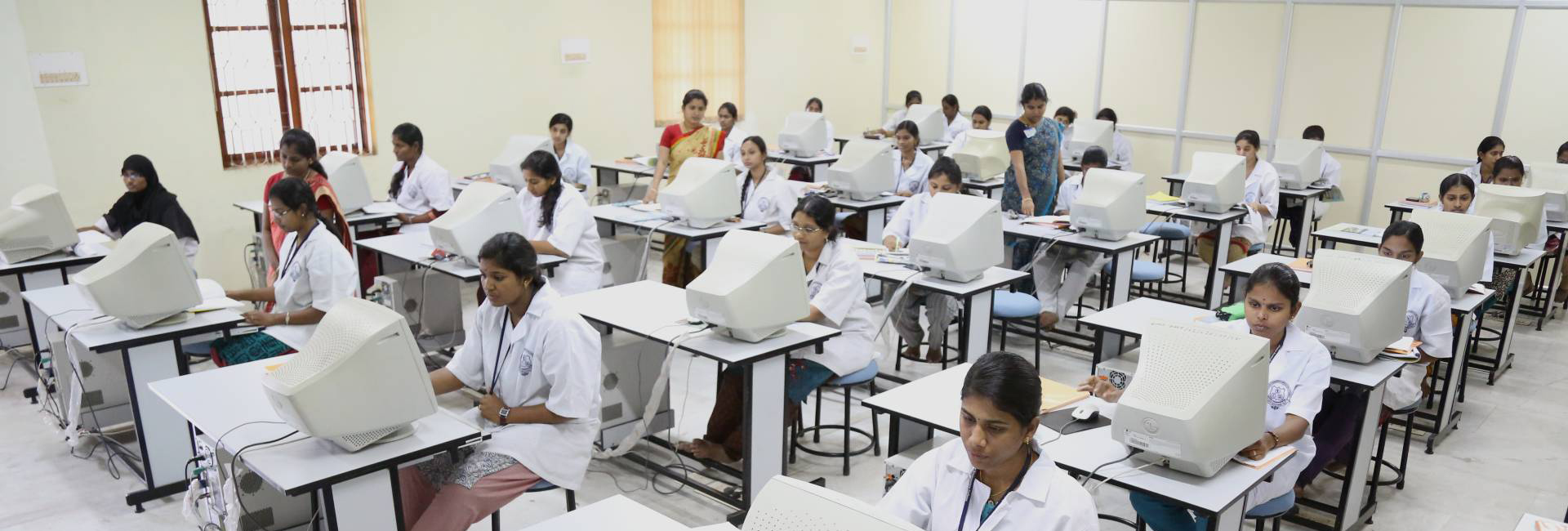
About the Department
Panimalar Engineering College affiliated to Anna University, Chennai, was established in the year of 2000. The Department of Electronics and Communication Engineering offers the following programs.
B.E. – Electronics and Communication Engineering ( 4 Years)
M.E. – Communication Systems ( 2 Years)
Ph.D. - Electronics and Communication Engineering ( Full time / Part time).
The main focus of the ECE department is to impart technical education that meets international standards in the field of Electronics and Communication for the benefit of the society. The department has four centres of excellence to promote research and development with industry collaboration. Centre of excellence in Robotics helps to foster innovation and develop industrial automation solutions. Centre of Excellence in Drones helps to train and upskill students for the future of unmanned aerial vehicle technology to make them industry ready and empower their technical skills in the drone technology space. Centre of Excellence in Flextronics supported by TANSAM and TIDCO is developed to upskill students in electronic service & Manufacturing. Centre of Excellence for Automotive Design, supported by UNO Minda, bridges the gap between engineering education and evolving industry needs in smart automotive systems, embedded solutions, and advanced manufacturing technologies. These centres of excellence serve as a hub for research, innovation, and entrepreneurship in various technologies. The Centre for research on Reconfigurable Wireless Technologies is developed to promote research and publications in various domains spanning from basics of circuits to emerging 6G wireless technologies.
Undergraduate students, post graduate students and Research scholars of the department are well qualified to meet the demands of the Industry and Research Organization. Our department is equipped with eminent faculty members who are expertise in various technical domains. The total strength of regular teaching faculty members in the department is 85, of which 38 of them are doctorates and all the remaining staff members are qualified with master’s degree. The research activities are carried out by a group of expert research members. The overall focus of the department is to
- Emphasis elemental knowledge of the subjects.
- Provide exposure to the emerging technologies.
- Inculcate strong research and development activities
Our department has various technical and non-technical clubs that provide opportunities for students to explore their interests, develop leadership skills, and engage in community service. We also emphasize soft skills training, including communication and personality development, ensuring that our students are well prepared for the professional world.


Vision and Mission

VISION
To provide world class quality education and excelling research activities in electronics and communication engineering with strong ethical values and social challenges.
MISSION
- M1: To impart high quality technical education by investing in faculty development and resources.
- M2: To adapt best teaching and learning process with strong state of art facilities for academic and research activities.
- M3: To enhance national and international collaborative activities for evolving indigenous technological solutions to meet social needs, nurture leadership and entrepreneurship qualities with ethical means.
- M4: To facilitate partnership with leading core industries and R&Ds for global outreach.
HOD Profile
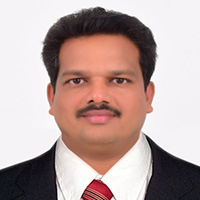
Dr.S.RAJAKUMAR M.E, Ph.D.
Professor and Head of the Department in Electronics and Communication Engineering
He received his B.E., degree in Electronics and Communication Engineering from Sun College of Engineering and Technology, Nagercoil affiliated to Manonmaniam Sundaranar University, Tirunelveli in the year 2003. He obtained his M.E., degree in Applied Electronics and Ph.D., in Image Processing from Sathyabama University, Chennai, India in the year 2006 and 2013 respectively. He has a total teaching experience of 21 years. He has published several research articles in National and International Conferences and Journals. His areas of interest include Digital Signal Processing, Image Processing, Pattern Recognition, VLSI and Communication Engineering. He has published a book on Digital Image Processing and published one Patent.
He has organized AICTE sponsored Faculty Development on “Smart Perspectives of IoT on 5G Communication- Practical Approach” and Anna University approved Faculty Development Programme on “Wireless Sensor Networks”.
Research Credentials
https://www.scopus.com/authid/detail.uri?authorId=57195713766Faculty List
| S.No. | Name of the Staff | Designation |
|
1 |
Dr .S. Rajakumar |
Professor & HOD |
|
2 |
Dr.M.P.Chitra |
Professor |
|
3 |
Dr.C. Esakkiappan |
Professor |
|
4 |
Dr. A. AmeeliaRoseline |
Professor |
|
5 |
Dr.B.Bhuvaneswari |
Professor |
|
6 |
Dr. S. Deepa |
Professor |
|
7 |
Dr. D. Selvaraj |
Professor |
|
8 |
Dr .S. Leones Sherwin Vimalraj |
Professor |
|
9 |
Dr.R.Manikandan |
Professor |
|
10 |
Dr. S. Uma Maheswari |
Professor |
|
11 |
Dr. D. Kalaiyarasi |
Professor |
|
12 |
Dr. G. Elumalai |
Professor |
|
13 |
Dr. J. JeneethaJebanazer |
Professor |
|
14 |
Dr.M.PremKumar |
Professor |
|
15 |
Dr. S.SathiyaPriya |
Professor |
|
16 |
Dr. A.Selvarani |
Professor |
|
17 |
Dr. D. Nithya |
Professor |
|
18 |
Dr. S. Shibu |
Professor |
|
19 |
Dr.M.Hariprasath |
Professor |
|
20 |
Dr. I. Poonguzhali |
Professor |
|
21 |
Dr.R. Suganthi |
Professor |
|
22 |
Dr.A.Dhanalakshmi |
Associate Professor |
|
23 |
Dr. C. Ramesh Kumar |
Associate Professor |
|
24 |
Dr. R. Rajalakshmi |
Associate Professor |
|
25 |
Dr.V.Aruna |
Associate Professor |
|
26 |
Dr. V. JeyaRamya |
Associate Professor |
|
27 |
Dr. N. Nithya |
Associate Professor |
|
28 |
Dr. D.Arul Kumar |
Associate Professor |
|
29 |
Dr.L.Ashok Kumar |
Associate Professor |
|
30 |
Dr.J.Navarajan |
Associate Professor |
|
31 |
Dr.T.Suguna |
Associate Professor |
|
32 |
Dr.SheebaSanthosh |
Associate Professor |
|
33 |
Dr. M. Saraswathi |
Associate Professor |
|
34 |
Dr. D. Padmapriya |
Associate Professor |
|
35 |
Mr. N. Chidambaram |
Associate Professor |
|
36 |
Mrs. N. Pritha |
Associate Professor |
|
37 |
Mr.V.Vasudhevan |
Associate Professor |
|
38 |
Dr.R.Prathipa |
Associate Professor |
|
39 |
Dr.M.Arun |
Assistant Professor |
|
40 |
Dr.R.Mary Victoria |
Assistant Professor |
|
41 |
Dr.S.Saranya |
Assistant Professor |
|
42 |
Mrs.N.Arunpriya |
Assistant Professor |
|
43 |
Mrs. G. Srividhya |
Assistant Professor |
|
44 |
Mr.R. Ashok |
Assistant Professor |
|
45 |
Mrs.S.MehaSoman |
Assistant Professor |
|
46 |
Mrs. F. Anne Jenefer |
Assistant Professor |
|
47 |
Mr.M.D.Manigandan |
Assistant Professor |
|
48 |
Mrs.R.Monisha |
Assistant Professor |
|
49 |
Mrs.M.Messiah Josephine |
Assistant Professor |
|
50 |
Mr.G.Venkatesh |
Assistant Professor |
|
51 |
Mrs.M.Sandhiya |
Assistant Professor |
|
52 |
Mr.K.Sivakumar |
Assistant Professor |
|
53 |
Mrs.D.Tamilselvi |
Assistant Professor |
|
54 |
Mrs.M. Nalini |
Assistant Professor |
|
55 |
Mrs.R.Seeba Sri |
Assistant Professor |
|
56 |
Ms.K.Kavitha |
Assistant Professor |
|
57 |
Mr.S.Panchamurthi |
Assistant Professor |
|
58 |
Mr.N.Jeyakannan |
Assistant Professor |
|
59 |
Mrs.R.Ranjana |
Assistant Professor |
|
60 |
Mrs.R.Indira |
Assistant Professor |
|
61 |
Mrs.N.Revathi |
Assistant Professor |
|
62 |
Mrs.J.JayaseeliPratheepa |
Assistant Professor |
|
63 |
Mrs.P.Gayathri Devi |
Assistant Professor |
|
64 |
Mrs.K.Rajalakshmi |
Assistant Professor |
|
65 |
Mr.N.Rajesh |
Assistant Professor |
|
66 |
Mr. N. Sudhakaran |
Assistant Professor |
|
67 |
Mr. A. Kumaresan |
Assistant Professor |
|
68 |
Mr. I. Arul Albert |
Assistant Professor |
|
69 |
Mr.D.Badri Narayanan |
Assistant Professor |
|
70 |
Mr.D.Gurupandi |
Assistant Professor |
|
71 |
Mr.K.M.Gopinath |
Assistant Professor |
|
72 |
Mrs.V.Kokila |
Assistant Professor |
|
73 |
Mrs.T.K.Preetha |
Assistant Professor |
|
74 |
Mrs.J.Indhumathi |
Assistant Professor |
|
75 |
Ms.V.Guruacthaya |
Assistant Professor |
Programme Educational Objectives(PEO)
Programme Outcomes (PO)
Programme Specific Outcomes (PSO)

Events Participated
Certification Course
Survey Forms






Question Bank – Academic Year 2026-27 (ODD Semester)
III Semester
| S.No. | Subject Code | Subject Name | Google Site Link |
|
1 |
23MA1302 | Linear Algebra and Numerical Analysis | https://sites.google.com/panimalar.ac.in/lana-r23/question-bank |
| 2 | 23EC1301 | Signals and Systems | https://sites.google.com/view/23ec1301signalsandsystems/home |
| 3 | 23EC1302 | Electronic Circuits I | https://sites.google.com/view/electronic-circuits-i/home?authuser=0 |
| 4 | 23EC1303 | Digital Electronics | https://sites.google.com/panimalar.ac.in/23ec1303-digitalelectronics/home |
| 5 | 23EC1304 | Control Systems Engineering | https://sites.google.com/panimalar.ac.in/23ec1304-control-systems-engin/home?authuser=1 |
| 6 | 23EC1311 | Electronic Circuits and Simulation Laboratory I | https://sites.google.com/panimalar.ac.in/23ec1311-ec1labmanual?usp=sharing |
| 7 | 23EC1312 | Control Systems Engineering Laboratory | https://sites.google.com/panimalar.ac.in/23ec1312-controlsystemsenginee/home?authuser=1 |
V Semester
| S.No. | Subject Code | Subject Name | Google Site Link |
|
1 |
23EC1501 | Digital Communication | https://sites.google.com/panimalar.ac.in/digitalcommunication/ppt/unit-4 |
| 2 | 23EC1502 | Discrete Time Signal Processing | https://sites.google.com/panimalar.ac.in/23ec1502-dtsp |
| 3 | 23EC1503 | Microprocessors and Microcontrollers | https://sites.google.com/view/23ec1503-microprocessors-and-m/home |
| 4 | 23EC1504 | Transmission Lines and Waveguides | https://sites.google.com/panimalar.ac.in/23ec1504-transmissionlinesandw/home |
| 5 | 23EC1908 | Wireless Networks | https://sites.google.com/panimalar.ac.in/23ec1908-wirelessnetworks/home |
| 6 | 23CS1003 | Cloud Computing | https://sites.google.com/view/pecececloud/home |
| 7 | 23EC1511 | Discrete Time Signal Processing Laboratory | https://sites.google.com/panimalar.ac.in/dtsplab?usp=sharing |
| 8 | 23EC1512 | Microprocessors and Microcontrollers Laboratory | https://sites.google.com/view/23ec1512-mp-mc-lab-manual/home |
| 9 | 23EC1513 | Analog and Digital Communication Laboratory | https://sites.google.com/view/adc-lab/home |
VII Semester
| S.No. | Subject Code | Subject Name | Google Site Link |
|
1 |
23EC1701 | Embedded Systems | https://sites.google.com/panimalar.ac.in/embedded-systems/home |
| 2 | 23EC1702 | Optical Communication and Networks | https://sites.google.com/panimalar.ac.in/23ec1702-ocn/home |
| 3 | 23EC1703 | Microwave Engineering | https://sites.google.com/panimalar.ac.in/23ec1703-microwave-engineering/question-bank |
| 4 | 23EC1926 | Artificial Intelligence and Machine Learning for Communication Engineers |
https://sites.google.com/view/23ec1926-aiml |
| 5 | 23EC1936 | Electromagnetic interference and Compatibility | https://sites.google.com/panimalar.ac.in/23ec1936-emic/question-bank |
| 6 | 23EC1711 | Embedded Systems Laboratory | https://sites.google.com/panimalar.ac.in/23ec1711-emblabmanual7thsem/lab-manual |
| 7 | 23EC1712 | Optical and Microwave Communication Laboratory | https://sites.google.com/panimalar.ac.in/23ec1712-oml/home |
Minors
| S.No. | Subject Code | Subject Name | Google Site Link |
|
1 |
23EC4006 | Embedded Systems for IoT | https://sites.google.com/panimalar.ac.in/23ec4006-embedded-systems-for-/notes |
| 2 | 23EC4008 | Artificial IoT | https://sites.google.com/panimalar.ac.in/23ec4008-aiot/syllabus |
Honors
| S.No. | Subject Code | Subject Name | Google Site Link |
|
1 |
23EC1934 | Smart Antennas | https://sites.google.com/panimalar.ac.in/23ec1939-smartantennas/home |
| 2 | 23EC1932 | Low Power IC Design | https://sites.google.com/view/23ec1932lowpowericdesign/home |
YouTube Video Links
|
S.No
|
Name of the Course
|
YouTube Video Link
|
| 1 |
Linear Integrated Circuits
|
|
| 2 |
Linear Integrated Circuits
|
|
| 3 |
Digital Signal Processing
|
|
| 4 |
Digital Communication
|
|
| 5 |
Electro Magnetic Fields
|
|
| 6 |
Digital Image Processing
|
|
| 7 |
Digital Image Processing
|
|
| 8 |
Digital Image Processing
|
|
| 9 |
Microwave Engineering
|
|
| 10 |
Microwave Engineering
|
|
| 11 |
Microwave Engineering
|
|
| 12 |
Microprocessor and Microcontroller
|
|
| 13 |
Optical Communication
|
|
| 14 |
Optical Communication
|
|
| 15 |
Optical Communication
|
|
| 16 |
Digital Electronics
|
|
| 17 |
Electronic Circuits 1
|
|
| 18 |
Electronic Circuits 1
|
|
| 19 |
Microprocessor and Microcontroller
|
|
| 20 |
Electronic Circuits 1
|
YouTube Channel links
|
S.No
|
YouTube Channel Name
|
YouTube Channel Link
|
| 1 |
jeneethajebanazer607
|
|
| 2 |
smithchart26
|
|
| 3 |
padmapriyajayaprakash5825
|
|
| 4 |
web-basedlearningtutorials7485
|
|
| 5 |
drsdeepa1131
|
|
| 6 |
sathyabhamab579
|
|
| 7 |
Panimalar Group of Institutions
|
Gallery


ECE Department Library Details
| Item | Details |
| Area | 50 Sq.m. |
| No. of Volumes | 2171 |
| No. of Titles | 681 |
| No. of Total Technical Journals(Scopus-National) | 30 (Access to Central Library-I) |
| No. of Reprint(Internationals Journals) | 07 (Access to Central Library-I) |
| No.of Computers | 01 |
| No. of E-Journals | 05(IEEE-ASPP/IEEE-POP/ELSIVIER-SCOPUS/ DELNET/EBSCOHOST |
| No.of E-Books | 01 (MGH) |

E-Resources(E-journals / E-Books)
Click Here

Remote Access Resources
Click
Here